
Start at the door
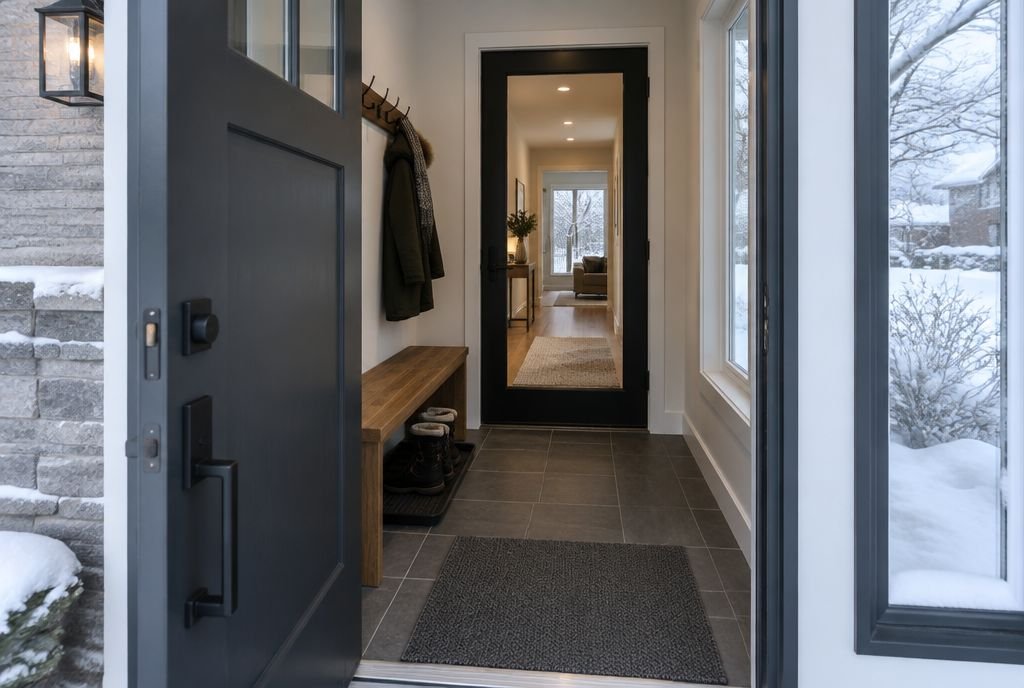
Every time an outside door opens in January, a wave of cold air comes in. A small vestibule, with a second door between the entry and the rest of the house, stops most of it and gives you somewhere to stamp off snow. A covered entry or a deep porch roof keeps snow and ice off the step, and a light and a power outlet nearby make winter evenings easier.
The door you use most, usually from the garage, deserves a proper mudroom. Our mudroom guide covers the details.
Use the winter sun
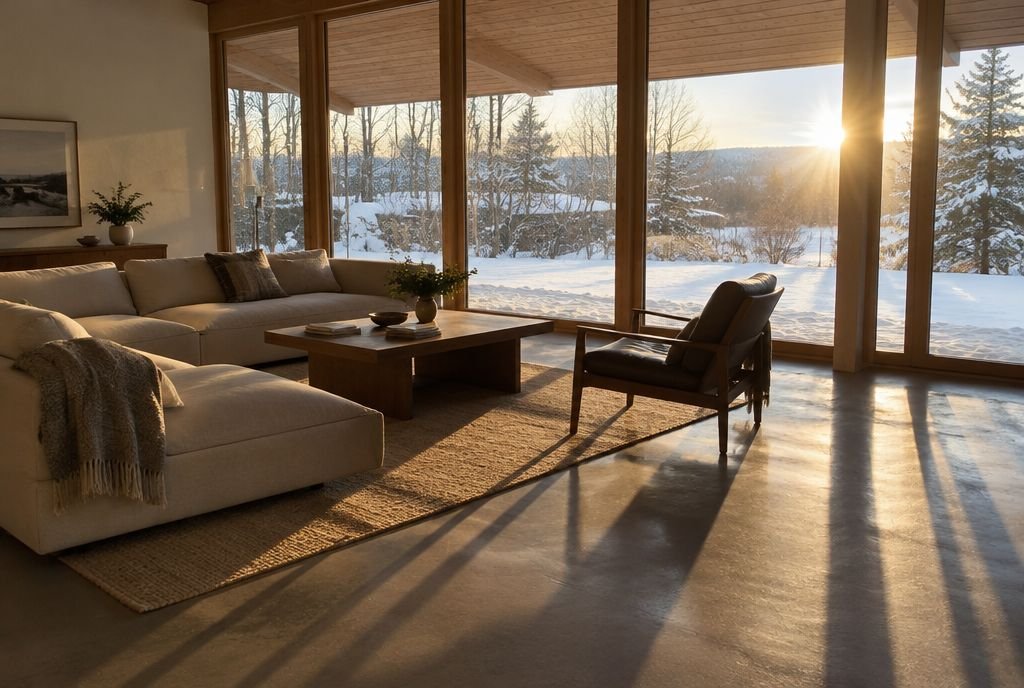
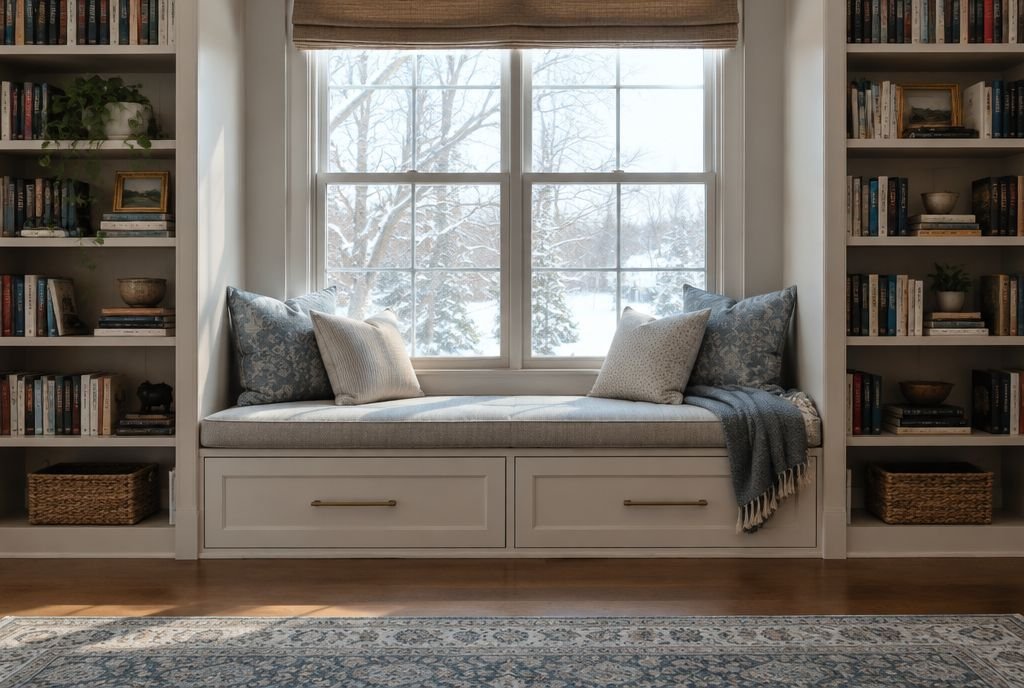
In winter the sun sits low in the southern sky, and south-facing windows let it reach deep into the house for free light and heat. A roof overhang or a sunshade sized for your latitude lets the low winter sun in and keeps the high summer sun out, though spring and fall sun can still overheat a room if the glass is generous.
Keep north-facing windows smaller, choose the best windows you can afford, and use window coverings that can be closed on the coldest nights. Our guide to double or triple pane windows explains the options.
Plan where the snow goes
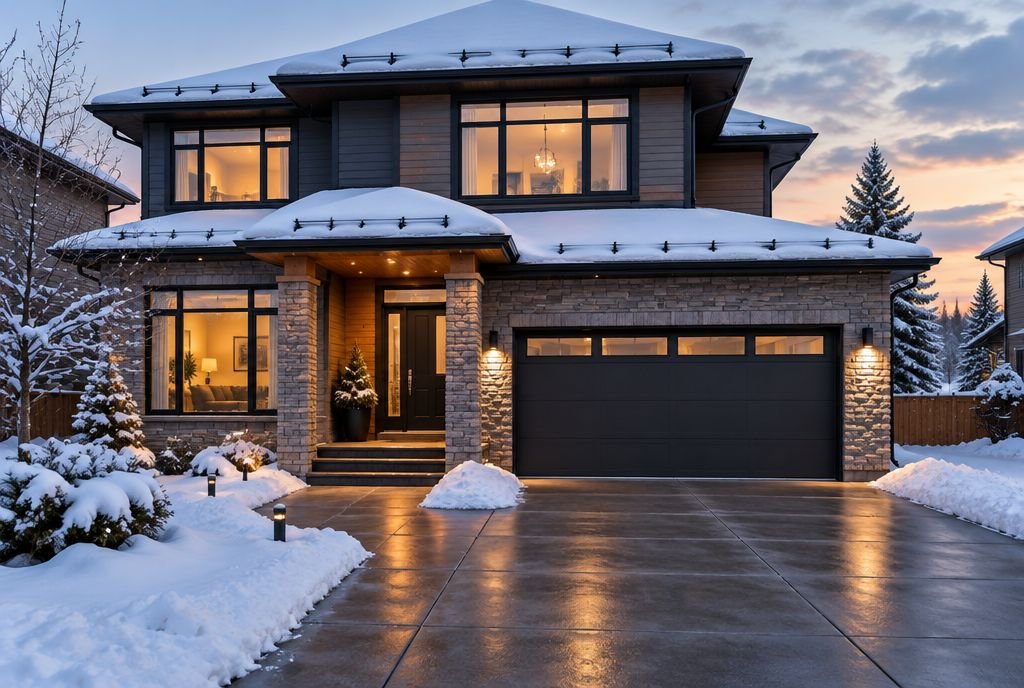
- Snow slides off metal roofs suddenly. Snow guards, or a roof that sheds away from doors, walkways and decks, prevent a dangerous dump on someone's head.
- Gutters and downspouts should carry meltwater well away from the foundation and off walkways, where it would freeze.
- Leave space beside the driveway and walkway to pile the snow you shovel.
- Snow melt systems, either electric cables or hydronic tubes under a driveway or walkway, keep surfaces clear and are easiest to add when the concrete is being replaced.
- Air sealing and insulating the attic are the real cure for ice dams. Our guide to what chinooks do to Calgary homes explains why.
Garages and cars
An insulated attached garage with an insulated door stays well above outdoor temperatures, which helps the rooms above and beside it. Add outlets for a block heater or an electric vehicle charger, a floor drain or a sloped floor for melting snow, and good lighting. The door into the house has to be weatherstripped and self-closing under the building code, to keep exhaust out.
Warm floors and comfortable rooms
Cold floors are the most common winter complaint in older houses, especially over garages, in basements and in rooms above crawlspaces. Insulating the floor from below helps most, and heated floors in bathrooms, entries and basements add real comfort. Our guide on whether heated floors are worth it compares the options.
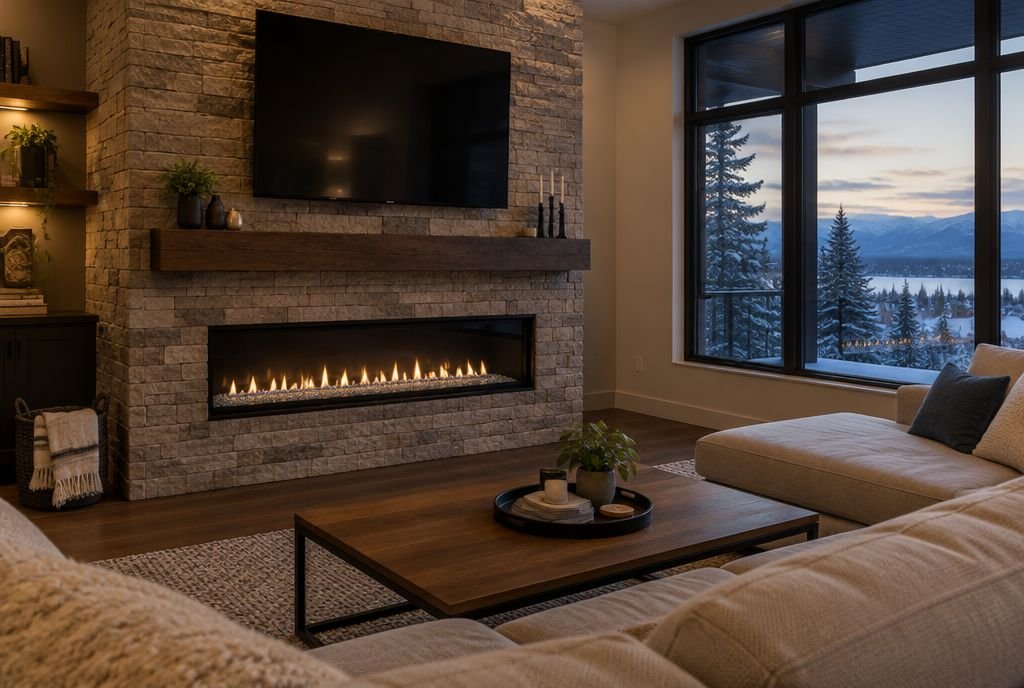
A fireplace in the main living space is both comfort and backup heat. See our guide to gas, electric and wood fireplaces.
Water and pipes
- Use frost-free outdoor taps, which shut the water off inside the warm wall, and disconnect hoses before the first freeze.
- Keep water pipes out of exterior walls and unheated spaces wherever you can.
- Make sure the main water shutoff is easy to reach and everyone in the house knows where it is.
- Protect the basement from sewer backups during spring melt and summer storms. Our backwater valve guide explains how.
Dry winter air
Cold outdoor air holds very little moisture, so heated indoor air in winter is often very dry. That is hard on wood floors, cabinetry and skin. A humidifier on the furnace can help, but too much humidity causes condensation and frost on windows. Good ventilation balances the two, and our guide to HRVs explains how. For more on dry air and hard water, read what hard water and dry air do to a home.
Outside equipment
Heat pumps, air conditioners and vents need clearance from snow drifts and from water dripping off the roof. Place them on a raised stand or wall bracket, away from where snow piles up and where it slides off the roof, and keep furnace and water heater vents clear of drifts.
Sources
- Construction Canada: The next generation of passive solar for cold climates
- National Research Council Canada: National Building Code of Canada
- City of Calgary: Climate ready measures, drainage and water management
Checked November 7, 2026. Programs and rules change; confirm current details with the source before you rely on them.
Talk it through with Kay2
Every project starts with a complimentary consultation with one of our estimators.