
Two things every Calgary home deals with
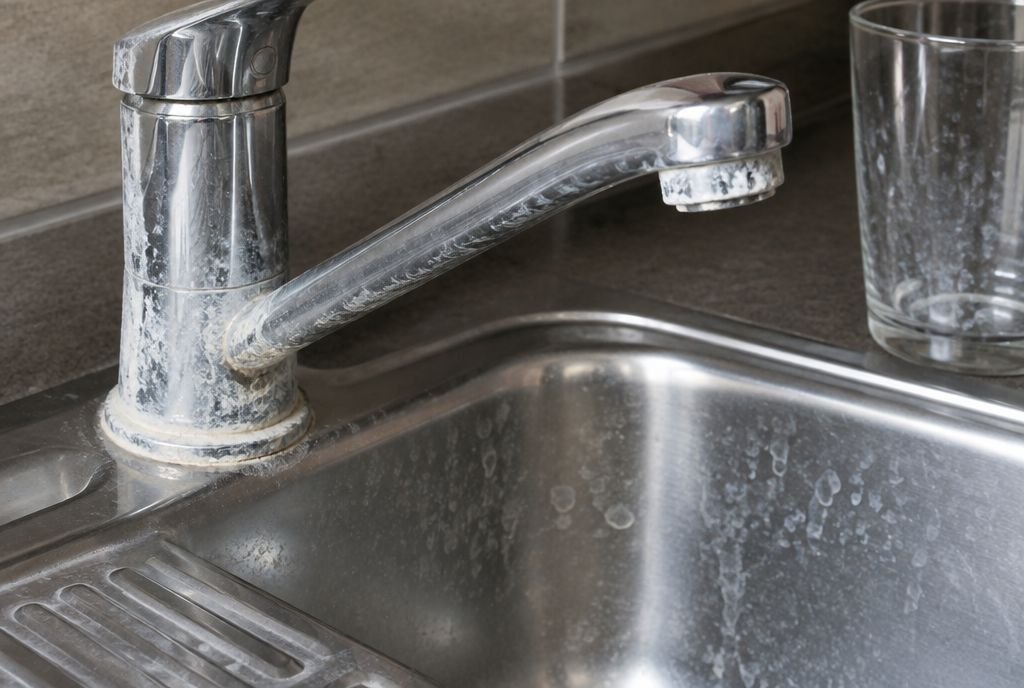
Ask anyone who has moved here and they will mention two things. White spots on every glass, faucet and shower door, and static shocks, cracked skin and floors that open up gaps in January. The first is hard water. The second is dry air. Neither is harmful to your health, but both affect how a house and its finishes age, and both are easy to plan for when you renovate.
How hard is Calgary's water?
Hardness is the amount of dissolved calcium and magnesium in water, picked up as rivers flow over rock. The City of Calgary reports it in milligrams per litre as calcium carbonate. In 2024, water from the Bearspaw treatment plant, which serves most of the northern half of the city from the Bow River, ranged from about 134 to 211 mg/L through the year. Water from the Glenmore plant, which serves much of the south from the Elbow River, ranged from about 172 to 290 mg/L. Hardness is usually highest in winter and lowest during the spring melt.
| Hardness | mg/L as calcium carbonate | Grains per gallon |
|---|---|---|
| Soft | Under 60 | Under 3.5 |
| Moderately hard | 60 to 120 | 3.5 to 7 |
| Hard | 120 to 180 | 7 to 10.5 |
| Very hard | Over 180 | Over 10.5 |
By that common scale, Calgary's water is hard to very hard, roughly 8 to 17 grains per gallon. The City notes there are no known health effects from the calcium and magnesium in drinking water. You can check current figures on the City's water quality page.
What hard water does to a house
- Leaves white scale on faucets, aerators, showerheads and glass shower doors, and cloudy spots on dishes.
- Builds scale inside kettles, coffee makers, dishwashers and water heaters, which lowers efficiency and shortens their life.
- Leaves rings and spots on dark polished stone, quartz and matte black fixtures, which show deposits more than lighter, brushed finishes.
- Clogs the small holes in rain showerheads and steam generators.
- Tempts people to clean with vinegar and other acids, which etch marble, limestone and travertine and can damage some fixture finishes.
Planning for hard water in a renovation
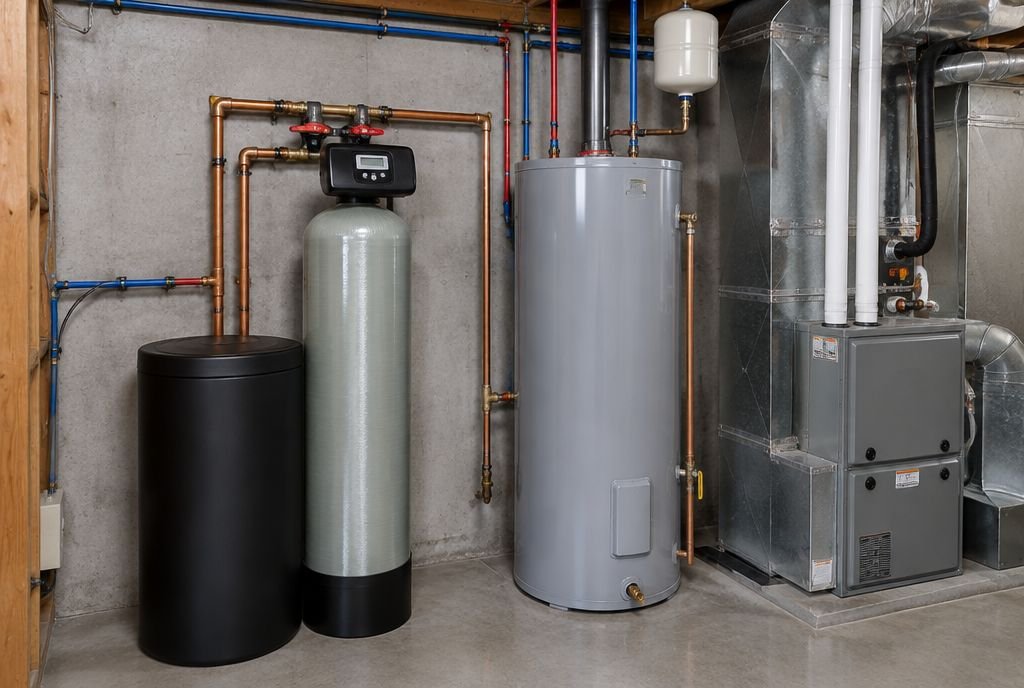
- Consider a water softener, which swaps calcium and magnesium for sodium or potassium through ion exchange. Plan space for the tank and brine tank near where water enters the house, a drain and a power outlet.
- Keep a cold, unsoftened line to the kitchen sink for drinking and cooking if you prefer, and to outdoor taps for the garden.
- Choose fixture finishes that hide spots, such as brushed nickel or brushed brass, and ask about factory coatings on glass shower panels.
- Pick counters that clean easily with mild soap. Our countertop comparison covers which ones tolerate acids.
- Add a squeegee hook in every shower. Thirty seconds after each shower prevents most glass spotting.
- Flush tank water heaters and descale tankless units on the schedule the manufacturer recommends.
Calgary's dry air
Calgary is semi-arid, and in winter cold outdoor air holds very little moisture. Once it is heated indoors, the relative humidity in a home can fall to 20 per cent or lower without a humidifier. Chinooks make it swing quickly, with warm, dry winds that can raise the temperature dramatically in a few hours.
Dry air dries out skin and sinuses, causes static shocks and makes wood shrink. Moist air in a cold climate brings the opposite problem, condensation on windows and inside walls. The goal is a balance.
What dry air does to finishes
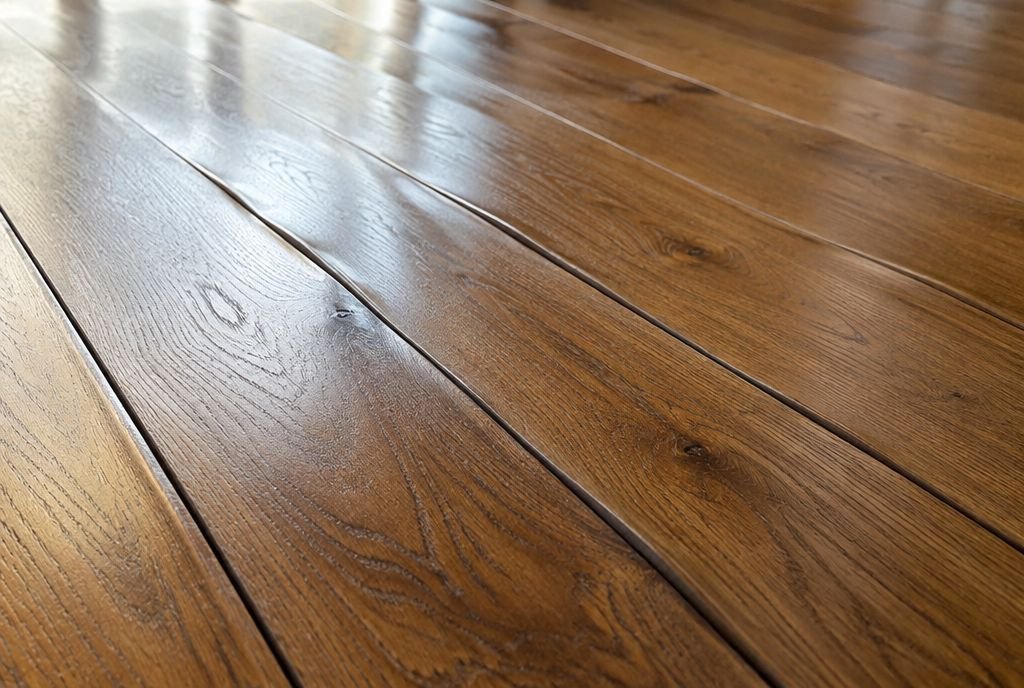
- Solid hardwood floors shrink and open small gaps between boards in winter, then close them again in summer. Many hardwood manufacturers ask for indoor humidity of roughly 35 to 55 per cent, which is hard to hold in a Calgary winter.
- Engineered hardwood, with its plywood core, moves far less and is often the better choice here.
- Solid wood cabinet doors and panels shrink, which can show an unpainted line at the edge of painted panels.
- Wood furniture, stair treads, railings and millwork can crack or open at joints.
- Pianos, guitars and other instruments go out of tune and can crack.
- Drywall tape and corner joints can show hairline cracks as framing dries out in the first winter after a renovation.
Finding the right humidity
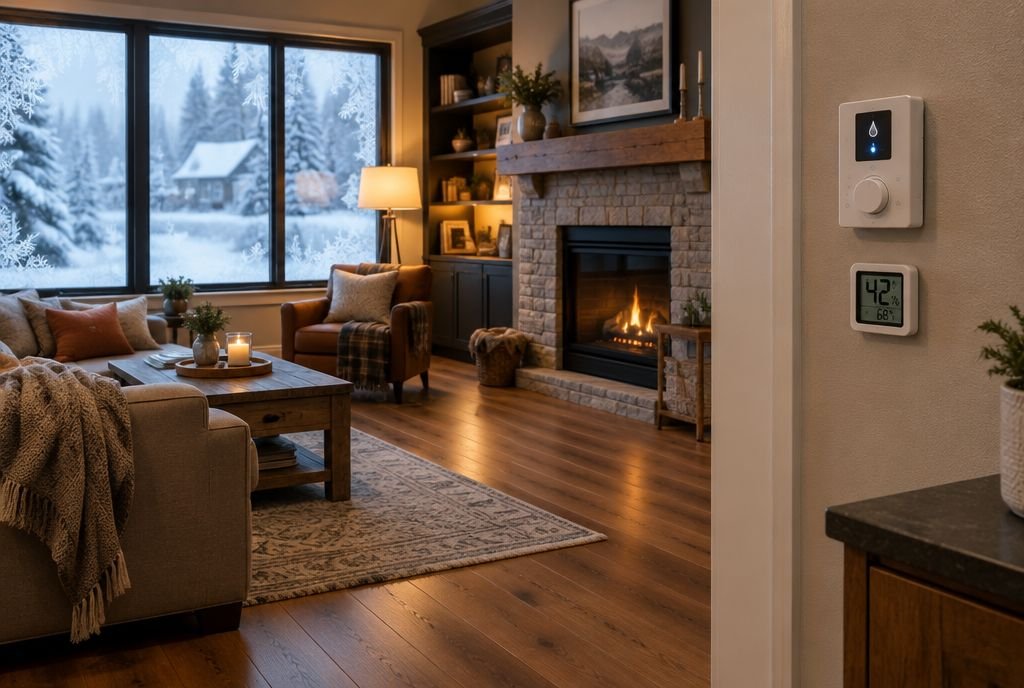
Buy an inexpensive hygrometer and watch your numbers through a winter. A whole-home humidifier on the furnace, either a bypass or a steam model, can hold humidity steadier than room units. Most come with an automatic control that lowers the target as it gets colder outside, because the colder the window glass, the less moisture it can take before condensation forms.
As a rough guide, many homes in very cold weather do best somewhere around 30 per cent, a little higher in milder weather. If you see condensation on the inside of windows, turn it down. Better windows and a tighter, well-insulated house let you keep humidity higher without condensation, and an HRV keeps fresh air moving.
Choosing materials for a dry climate
- Choose engineered hardwood or well-acclimatized solid wood installed by people who measure moisture first.
- Give wood floors and millwork time to acclimatize in the house before installation, with the heat and humidity at normal living levels.
- Pick painted cabinet doors with slab or engineered panels, or a finish that tolerates seasonal movement.
- Plan the humidifier, a hygrometer and an HRV into a renovation rather than adding them later.
- Expect and plan for minor touch-ups after the first winter in a newly renovated home, especially drywall joints.
Related guides
Our renovation dictionary explains terms like vapour barrier and HRV, and our guide to renovating in winter covers how heat and humidity are managed on a winter job site. If you live in an older home, read what to check in an older Calgary home too.
Sources
- City of Calgary: Water quality, water hardness and water data
- NASD: Interpreting your water test report
Checked October 18, 2026. Programs and rules change; confirm current details with the source before you rely on them.
Talk it through with Kay2
Every project starts with a complimentary consultation with one of our estimators.