What is shaping Canadian homes in 2027
Most trend lists are about paint and furniture. The bigger forces in Canadian homes right now are economic, demographic and climate driven, and they decide what people renovate long before they choose a colour. This guide draws on the Canadian Home Builders' Association, Statistics Canada, the Insurance Bureau of Canada, Natural Resources Canada, the federal tax rules and the 2027 forecasts from designers and paint companies.
Kay2 is a Calgary renovation company, but these trends apply across the country, and where a region is different we say so.
Renovating carefully, not stopping
Renovation is one of the largest parts of Canada's housing economy. The Canadian Home Builders' Association says it employs more than half a million Canadians and represents over $107 billion in investment. Its new Renovation Market Index shows a cautious market. The spring 2026 reading was 50.3, which is neutral, and the association expects renovation investment to grow by less than one percent in 2026. After inflation, renovation spending is at its lowest level since 2013.
The picture is very different by region. Renovators in Atlantic Canada and the Prairies report the strongest conditions, while Ontario and British Columbia, where affordability is tightest, are the weakest. Altus Group's 2026 Canadian Cost Guide describes 2026 as cautious with optimism building toward 2027 as interest rates settle.
For homeowners, this means 2027 projects are more considered. People are fixing what is worn out or not working, planning bigger projects in phases and spending on the rooms they use most. A careful market can also mean better availability from established renovators.
Costs are rising unevenly
Construction prices are no longer moving together across the country. Altus Group found overall construction costs rising by 4 percent or more in Calgary, Edmonton and Montreal, including low-rise residential and renovation work, while costs in Toronto and Vancouver have been easing. Labour is now a large part of the increase in many provinces.
Trade has added uncertainty. Canada has had counter-tariffs on American steel and aluminum since 2025, which affects metal-heavy items such as structural steel, ductwork and some window and door frames. Because rates and product lists have changed several times, it is worth getting quotes that are current and asking which items are most exposed. Our guide to keeping a renovation on budget helps decide where the money matters most.
More families under one roof
Statistics Canada counted 441,750 multigenerational households in the 2021 census, home to 2.4 million people. Their number grew 21.2 percent in ten years, much faster than the 12.4 percent growth in all households, and most people living in them put financial reasons at the top of the list.
That shows up in renovations as secondary suites, main floor bedrooms with their own bathroom, separate entrances and additions for a parent or an adult child. Federal rules support it. The Multigenerational Home Renovation Tax Credit covers up to $50,000 of costs to create a self-contained unit for a senior or an adult with a disability to live with a relative, and since January 2025 CMHC-insured refinancing lets homeowners borrow up to 90 percent of a home's value after a suite is added, for homes worth less than $2 million. Our guide to aging-in-place and multigenerational renovations covers the design side, and our tax credits guide explains the claims.
Homes designed to age with you
Canada's population is getting older, and for many households the plan is to stay in the home and neighbourhood they know. Renovations in 2027 increasingly include features that make that possible later, such as wider doorways, curbless showers, blocking in bathroom walls for future grab bars, better lighting and a bedroom and full bathroom on the main floor.
The Home Accessibility Tax Credit lets a qualifying person who is 65 or older, or eligible for the disability tax credit, claim up to $20,000 a year in eligible expenses for work that makes a home safer and easier to use. Building these features in during a renovation costs far less than retrofitting them in a hurry later.
Resilience moves to the top of the list
Severe weather caused more than $3.7 billion in insured damage across Canada in the summer of 2026, the third costliest summer on record, according to the Insurance Bureau of Canada. Wildfires in British Columbia, flooding in Ontario's Niagara Region, storms in Manitoba, Saskatchewan, Quebec and Ontario, and hail on the Prairies all contributed. Insurance prices are rising with the losses, and insurers are starting to reward homes that are built to resist damage.
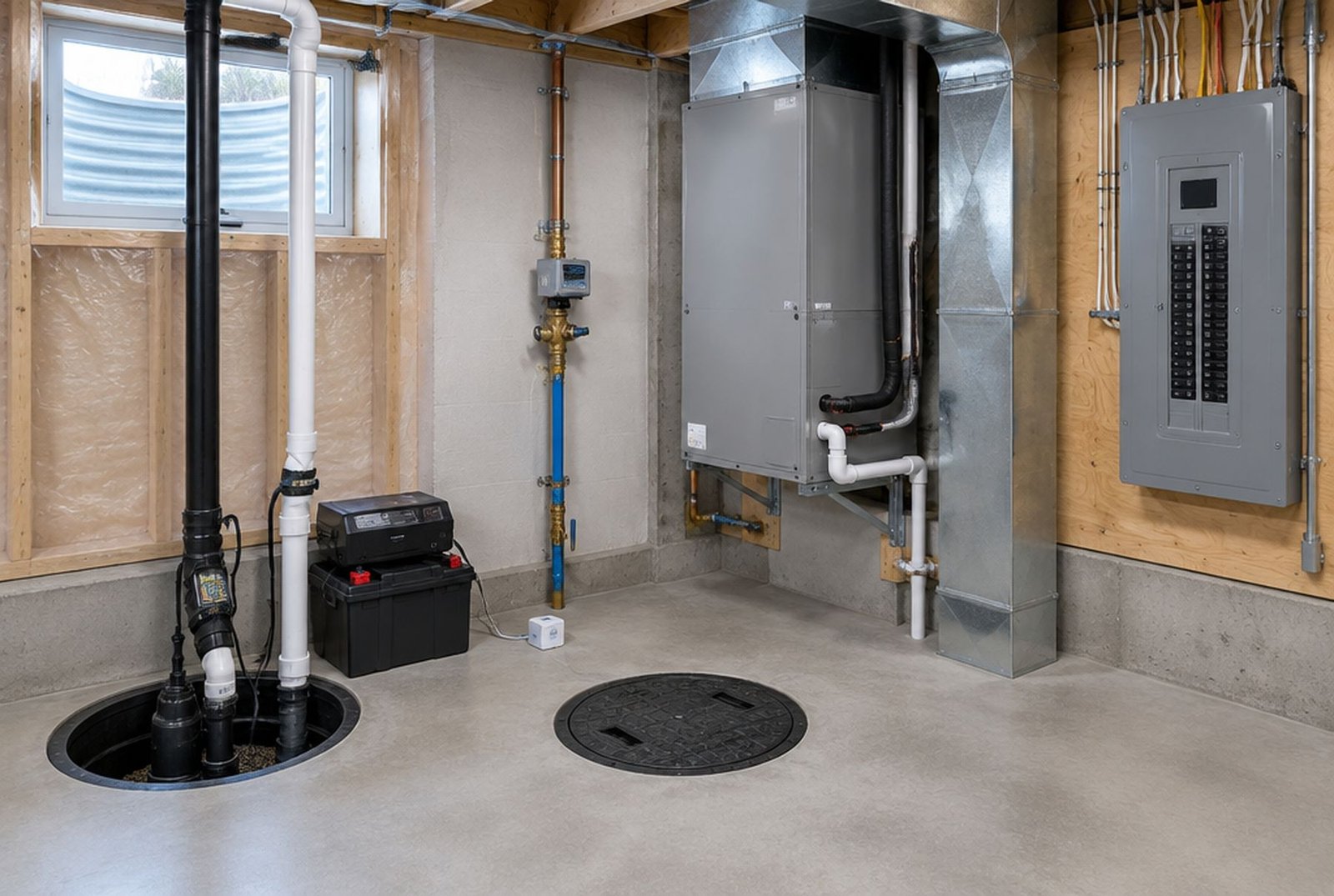
That is changing what people ask for in a renovation. The most common resilience upgrades are listed below, and most of them are far cheaper to add while walls, floors or the roof are already open.
- Backwater valves and sump pumps with battery backup to keep sewer and groundwater out of the basement. See our guide to backwater valves.
- Water leak detectors with automatic shut-off valves on the main water line.
- Impact-resistant roofing and siding where hail is common. See our guide to building a hail-resistant exterior.
- Ember-resistant vents, non-combustible siding and cleared space around the house in wildfire country, following the FireSmart guidance used across Canada.
- Backup power and a heating plan for long outages.
Heat pumps and electrification, with less federal money
The federal Canada Greener Homes Grant is closed. It helped more than 406,000 households complete retrofits, and federal programs have supported close to 285,000 heat pump installations since 2020. Support for 2027 now comes mostly from provinces, utilities and a few targeted federal programs, so it varies a great deal depending on where you live.
Heat pumps keep spreading anyway, particularly cold-climate models that work in a Canadian winter alongside a furnace or on their own. Electric vehicle chargers, induction cooking and heat pumps all need electrical capacity, so many renovations now include a service upgrade. City rules are also uneven. Montreal bans gas heating and cooking in most new buildings, while Vancouver lifted its gas heating ban for new homes in 2026. Our guide to paying for energy upgrades explains the options open to Calgary homeowners.
Rooms with a purpose
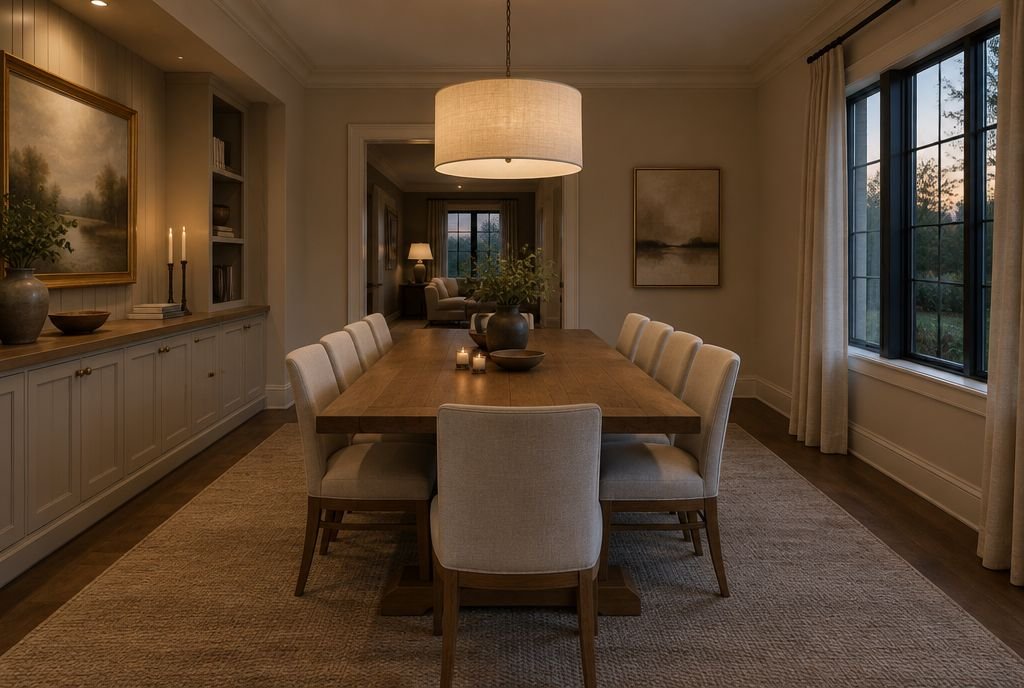
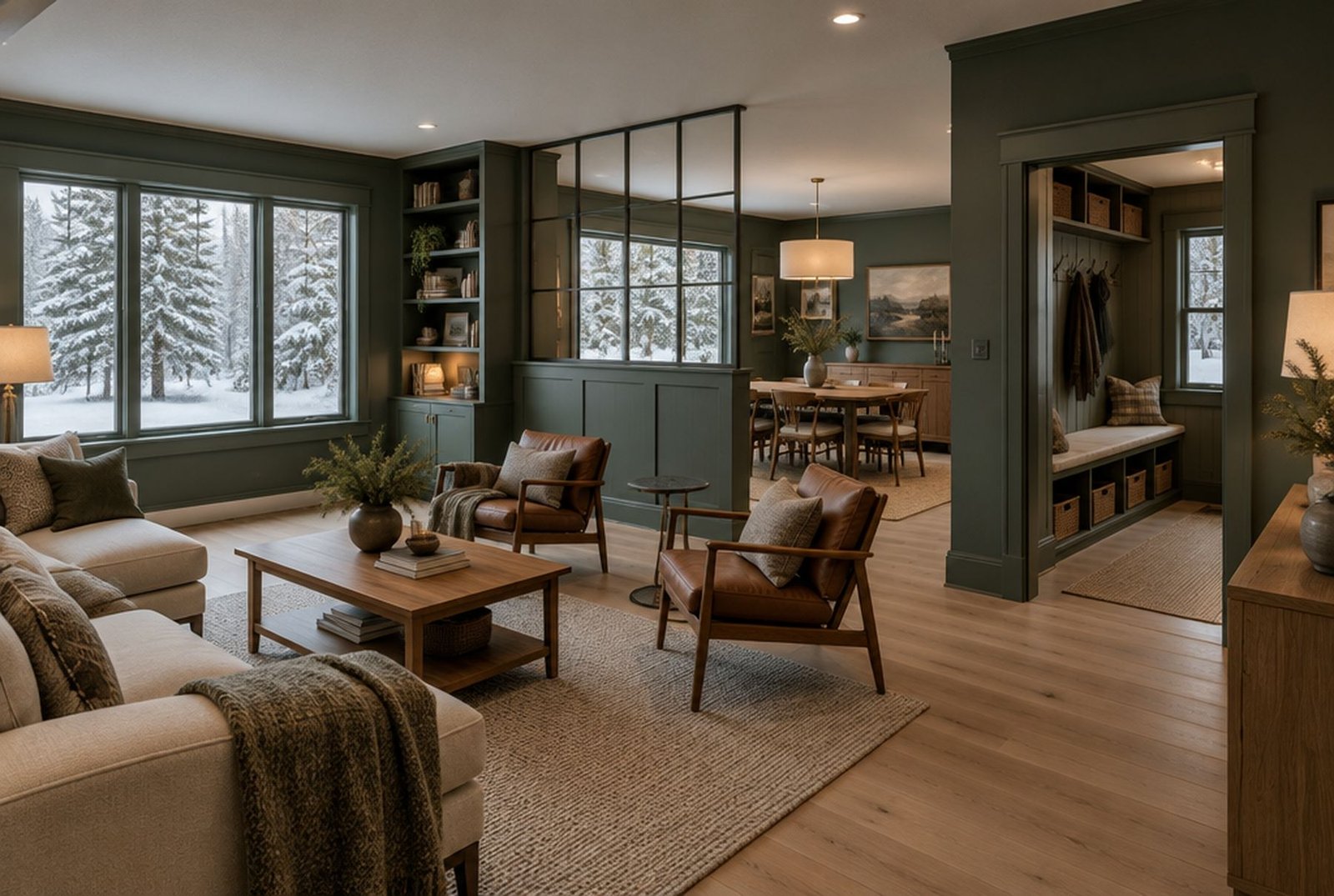
After years of knocking down walls, Canadians are putting some of them back. The National Kitchen and Bath Association's 2027 report found designers replacing open floor plans with partial walls, glass partitions and pocket doors, and 81 percent of the professionals surveyed call intentional zoning a lasting trend. People want a quiet room to work, a space for guests and a place where noise and mess can be closed off. Our guide to the rooms people are bringing back looks at dens, formal dining rooms and more.
The mudroom is the clearest example. In the same report, 94 percent of the professionals expect attached mudrooms to grow in popularity, which makes sense in a country with long, wet and snowy winters. Our guide to designing a mudroom for a snowy climate covers what to include.
Green walls, warm wood and earthy colour
For 2027 the major paint companies have landed on green. Benjamin Moore named Webster Green, a deep green from its historical colour collection, as its Colour of the Year, Sherwin-Williams and HGTV Home chose a soft green called Celery, and Behr chose Grounded, an olive with brown undertones. Other brands picked a warm orange, smoky and mid-tone blues and a deep coffee brown. The direction is earthy, natural and calm rather than grey and white.
Natural wood is the material that goes with it. In the Houzz 2026 Kitchen Trends Study, wood overtook white as the most popular cabinet finish in renovated kitchens. Our flooring guide compares wood and its alternatives room by room.
Wellness at home
Designers now treat clean air and water as part of the design. The 2027 kitchen report lists ventilation, water filtration, touchless faucets and sound-absorbing materials as wellness features, and fresh-air ventilation matters more as Canadian homes become more airtight. Our guide to whether your home needs an HRV explains why.
At the high end, wellness means rooms for recovery, such as steam showers, saunas, home gyms and spa bathrooms. Our guide to steam showers and home saunas covers what they take to build.
Smart homes get practical
Designers are cautious about artificial intelligence. Only about a quarter of the professionals in the 2027 kitchen report expect homeowners to want appliances that use it. What people are actually adding is practical technology that protects the house or saves effort, such as leak detection, lighting controls on a phone, smart thermostats, cameras and appliance alerts. The best time to run the wiring for any of it is during a renovation, before the walls are closed.
What these trends mean for your renovation
- Plan the whole project, then build it in phases if the budget needs it, so early work does not have to be torn out later.
- Add resilience while the house is open, such as a backwater valve during basement work or a leak shut-off during a kitchen.
- Size the electrical service for what you will want in ten years, not just what you have today.
- Think about who might live in the house later, and leave room for a suite, a main floor bedroom or a curbless shower.
- Use trend colours on paint and decor, and keep long-lasting surfaces like stone, tile and cabinetry timeless.
- Check provincial, utility and municipal programs before you start, since federal support has narrowed.
Planning a renovation with Kay2
Kay2 designs and builds renovations and additions in Calgary and the surrounding area, from full homes to kitchens, basements and specialty rooms, and every client gets a guaranteed price before construction begins. If you are planning for 2027, see our interior design service or book a consultation.
Sources
- Canadian Home Builders' Association: Renovators expect challenging market conditions ahead (first Renovation Market Index)
- Canadian Home Builders' Association: Renovation Market Index
- Altus Group: Caution in 2026, optimistic for 2027
- Statistics Canada: Unpacking Canada's multigenerational households
- Canada Revenue Agency: Home accessibility expenses
- CMHC: Refinance for building secondary suites
- Insurance Bureau of Canada: Summer 2026 insured damage
- Government of Canada: Greener Homes Initiative progress update, February 2026
- City of Montreal: Ban on combustion heating devices in new buildings
- CBC News: Vancouver pauses ban on natural gas heating in new homes
- Kitchen and Bath Design News: NKBA 2027 Kitchen Trends Report
- Multifamily Executive: What the 2027 colours of the year say about design trends
- Houzz: 2026 Kitchen Trends Study
Checked November 9, 2026. Programs and rules change; confirm current details with the source before you rely on them.
Talk it through with Kay2
Every project starts with a complimentary consultation with one of our estimators.