
The short answer
For most renovated Calgary homes, a direct vent gas fireplace is the best all round choice. It gives real heat at the flick of a switch, it is clean and it needs little more than an annual service. Electric is the easiest to install and can go almost anywhere, but it is more about the look than the heat. Wood gives the real thing, smell and crackle included, and suits a cabin or a family that loves the ritual of it.
Gas fireplaces
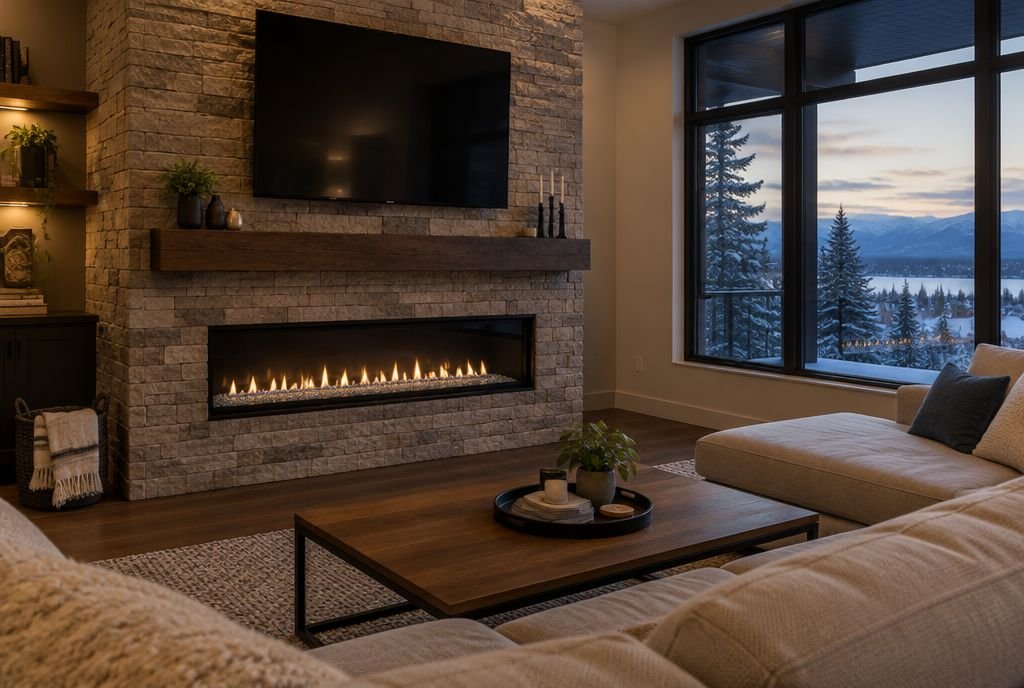
A direct vent gas fireplace is a sealed box with a glass front. It draws outdoor air for burning and sends exhaust outside through a pipe, usually through an exterior wall, so it does not use the air in your room. It needs a gas line, a vent route and usually a power supply for the ignition and fan.
Gas fireplaces sold in Canada are tested for fireplace efficiency, and Natural Resources Canada's EnerGuide label shows that rating as a percentage. NRCan notes that models on the market range from about 30 to 70 percent, so it is worth comparing the label rather than the brochure. NRCan also advises against setting gas logs into an old open wood fireplace, because most of the heat goes up the chimney.
Electric fireplaces
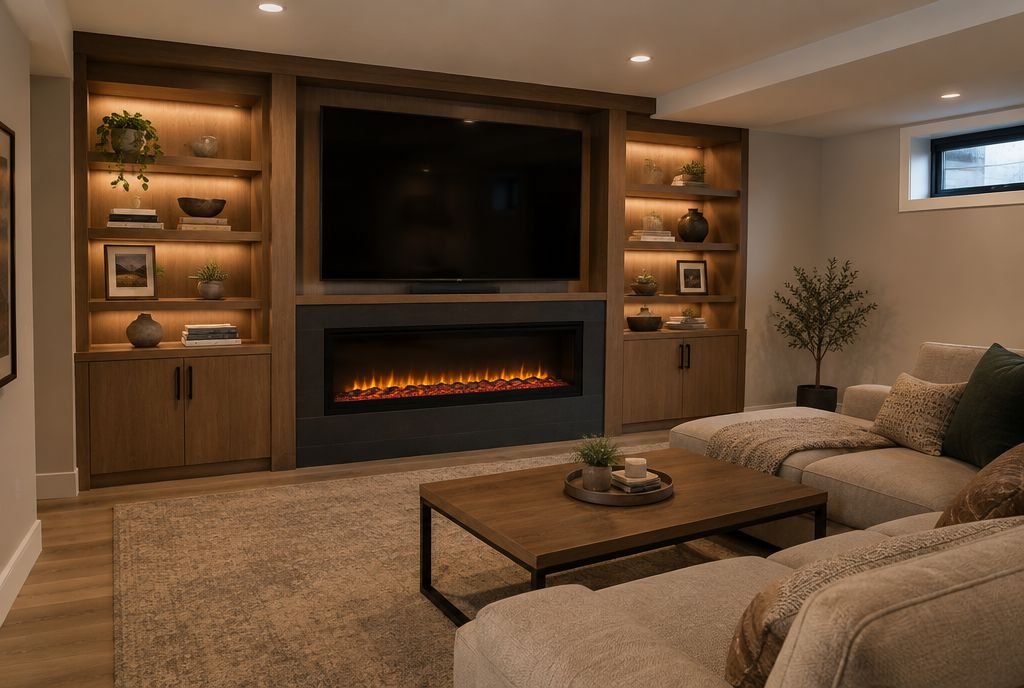
An electric fireplace makes a flame effect with lights and, on most models, has a small heater built in. Many run on a standard household circuit, and a typical 1,500 watt heater gives about 5,000 BTU an hour, enough to take the chill off a room but not to heat it in January. Larger linear models often need their own circuit.
Because there is no gas and no venting, electric units can go into basements, bedrooms, condos and media walls where gas would be hard or impossible. They are also the cheapest to install and need almost no upkeep.
Wood fireplaces and stoves

A wood fire is the most atmospheric of the three and the most work. It needs a proper chimney, a hearth and clearances to anything that can burn, and it needs firewood stored somewhere dry. Old open masonry fireplaces send much of their heat up the chimney. A modern certified wood stove or wood insert burns far more cleanly and gives much more heat to the room.
Before you plan one, talk to your insurer, and have any existing chimney inspected and swept before it is used again. In mountain homes and cabins, a good wood stove is also a source of heat when the power goes out.
Side by side
| Gas | Electric | Wood | |
|---|---|---|---|
| Heat | Good to very good, depending on the efficiency rating | Light, usually a supplement | Very good from a certified stove or insert, poor from an open fireplace |
| Installation | Gas line, vent through a wall or roof, power | A plug or a dedicated circuit | Chimney, hearth, clearances |
| Where it can go | Most rooms with an outside wall or vent route | Almost anywhere | Where a chimney can run |
| Upkeep | Annual service | Very little | Firewood, ash, chimney sweeping |
| Feel | Real flame, no smell | Flame effect | Real fire, smell and sound |
Converting an old wood fireplace
If you have an old brick fireplace you never use, a gas insert is the most common upgrade. It slides into the existing firebox, and a liner runs up the chimney to vent it. You keep the look of the fireplace and get real heat. A wood insert works the same way for people who want to keep burning wood. Either way, the chimney should be inspected before anything goes in, because cracked flue tiles and loose mortar are common in older Calgary homes.
Putting a TV above a fireplace
It is the most requested layout and it can work, but heat rises. Every fireplace comes with installation instructions that set minimum clearances to mantels and combustible materials, and some state how far above the unit a TV can go. Many modern linear gas fireplaces offer a heat release kit that sends warm air out through vents higher on the wall, which keeps the TV area cooler.
Plan the TV height for comfort too. Above a tall fireplace a screen can end up too high to watch from the sofa. A deep mantel, a recessed niche or a pull-down mount can help, and blocking and power should be in the wall before it is closed.
Related guides
Planning a basement family room around a fireplace? Read our guide to basement development costs. For lighting around a fireplace wall, see our lighting guide for every room.
Sources
- Natural Resources Canada: Gas fireplaces, EnerGuide
- Natural Resources Canada: All about gas fireplaces
- City of Calgary: Plumbing and gas permits
Checked October 29, 2026. Programs and rules change; confirm current details with the source before you rely on them.
Talk it through with Kay2
Every project starts with a complimentary consultation with one of our estimators.