

The short answer
For a typical home renovation in Calgary in 2026, the building permit itself is a flat fee. It is $205.92 for an interior renovation, a deck or a garage renovation, $333.84 for a new basement development, a new garage or an addition under 400 square feet, and $1,302.08 for an addition over 400 square feet or a backyard suite.
Electrical, plumbing, gas and mechanical work each need their own trade permit on top. A homeowner doing their own work pays $116.50 per trade permit. A contractor's trade permit is based on the value of the work, at $112 plus $9.79 for every $1,000. If your project also needs a development permit, add $550 to $775 or more.
Put together, most home renovations carry somewhere between a few hundred dollars and about $1,500 in City permit fees. New homes and large projects cost more, because they are charged on the value of the build.
Calgary building permit fees for home projects in 2026
| Project | Building permit, including the 4% Safety Codes Council fee |
|---|---|
| Interior renovation of an existing house or developed basement | $205.92 |
| Deck, porch, carport, hot tub, swimming pool, fireplace or retaining wall | $205.92 |
| Renovating an existing garage, or a garage addition | $205.92 |
| Legalizing an existing secondary suite | $205.92 |
| New basement development | $333.84 |
| New garage | $333.84 |
| Addition under 400 square feet | $333.84 |
| New secondary suite | $403.52 |
| Addition over 400 square feet | $1,302.08 |
| New backyard suite | $1,302.08 |
| New single, semi-detached or duplex home | $112 plus $10.14 per $1,000 of construction value, plus inspection and other charges |
These are the City of Calgary's 2026 Building and Trade Permit Fee Schedule amounts (R2026-02). Each flat fee is made up of a $112 processing fee, a base fee for the type of work, and the Alberta Safety Codes Council levy of 4 per cent. GST is included in the totals.
Trade permits for electrical, plumbing, gas and heating
Almost every renovation touches wiring or pipes, and each trade needs its own permit. There are two ways they are charged.
| Who does the work | 2026 fee |
|---|---|
| A homeowner doing their own electrical, plumbing or gas fireplace work | $116.50 per permit |
| A licensed contractor | $112 plus $9.79 per $1,000 of the value of that trade's work, plus the 4% levy, with a $116.50 minimum |
| An annual electrical permit | $162.24 |
For a contractor's trade permit, the value counts both labour and materials. If you supply the materials yourself, their value still counts. Homeowner permits have strict conditions, which our guide to homeowner electrical and plumbing permits explains.
Development permit fees, when you need one
A development permit is the City's planning approval. You only need one when a project does not meet every rule in the Land Use Bylaw, or when your property or project falls into a category that always needs one, such as a larger addition, a home in a flood area or a listed heritage home. Our guide to building and development permits explains the difference.
| Development permit | 2026 fee |
|---|---|
| A relaxation of the bylaw for a home renovation, deck, garage, shed or pergola | $550, including advertising and a completion inspection |
| An addition of 10 square metres or less, in the developed area | $395 |
| An addition over 10 square metres, in the developed area | $775, plus a $472 service grades fee for most applications |
| Legalizing an existing secondary suite during the amnesty | Waived until December 31, 2026 |
A development permit also adds time. The City estimates 10 to 12 weeks, including a 21 day appeal period, compared with about 7 days for most home building permits.
Worked examples
These examples use the 2026 schedule. Contractor trade permits are estimated, because the exact value of each trade's work varies from job to job.
| Project | Permits | Approximate City fees |
|---|---|---|
| Main-floor kitchen and living area renovation, about $120,000, with $15,000 of electrical, $8,000 of plumbing and $5,000 of gas and heating work | Building permit for an interior renovation, plus contractor electrical, plumbing and gas permits | About $840 |
| New basement development with a bathroom, done by a contractor | Building permit for a new basement, plus contractor electrical and plumbing permits | About $700 to $900 |
| A new deck, built by the homeowner, no relaxation needed | Building permit for a deck | $205.92 |
| A 600 square foot rear addition that needs a development permit | Development permit, building permit, and contractor trade permits | About $3,000 to $3,500 |
The City charges one processing fee per permit and a base fee for each separate scope of work, so a project that combines a basement and a deck pays one $112 processing fee and both base fees. If you are budgeting a whole renovation, permits are rarely the number to worry about. Our Calgary Renovation Cost Guide covers the bigger costs.
Other fees you may run into
- Starting work before the permit is issued doubles the permit fee under the City's schedule. It is one of the most expensive shortcuts in renovation.
- Extending a permit costs 10 per cent of the permit fee, with a $112 minimum. Building permits expire if work has not started within 180 days of issue, and trade permits after 330 days.
- Reinstating an expired permit within 30 days costs half the original fee.
- Cancelling a permit gets you a refund, minus 25 per cent of a building permit fee (at least $112) or 10 per cent of a trade permit fee (at least $56).
- Demolishing a house or garage costs $112 plus $1.44 per square metre of building, with a $116.50 minimum.
- Putting a disposal bin or materials on the street or lane needs a separate street use permit from the City's roads department.
- For homes built before 1990, an asbestos abatement form is needed before the permit is released. The form is free, but testing and any removal are not, as our asbestos guide explains.
What happens if you skip the permit
Beyond the double fee, work done without a permit can cause problems with insurance claims and with selling the house, and the City can require walls and ceilings to be opened so the work can be inspected. Making it legal later always costs more than the permit would have. Our guide to renovations done without a permit walks through what happens.
Projects that may not need a permit at all
- Painting, flooring, new cabinets and countertops in the same layout, and replacing fixtures in the same place.
- Replacing roofing, siding and trim with the same material, and windows and doors of the same size.
- Most fences under the City's height limits, and sheds under 10 square metres, though location rules still apply. Our guides to fences and sheds, pergolas and garages have the details.
Even when the building work needs no permit, new wiring, plumbing or gas almost always does.
Who pays for the permit and who applies
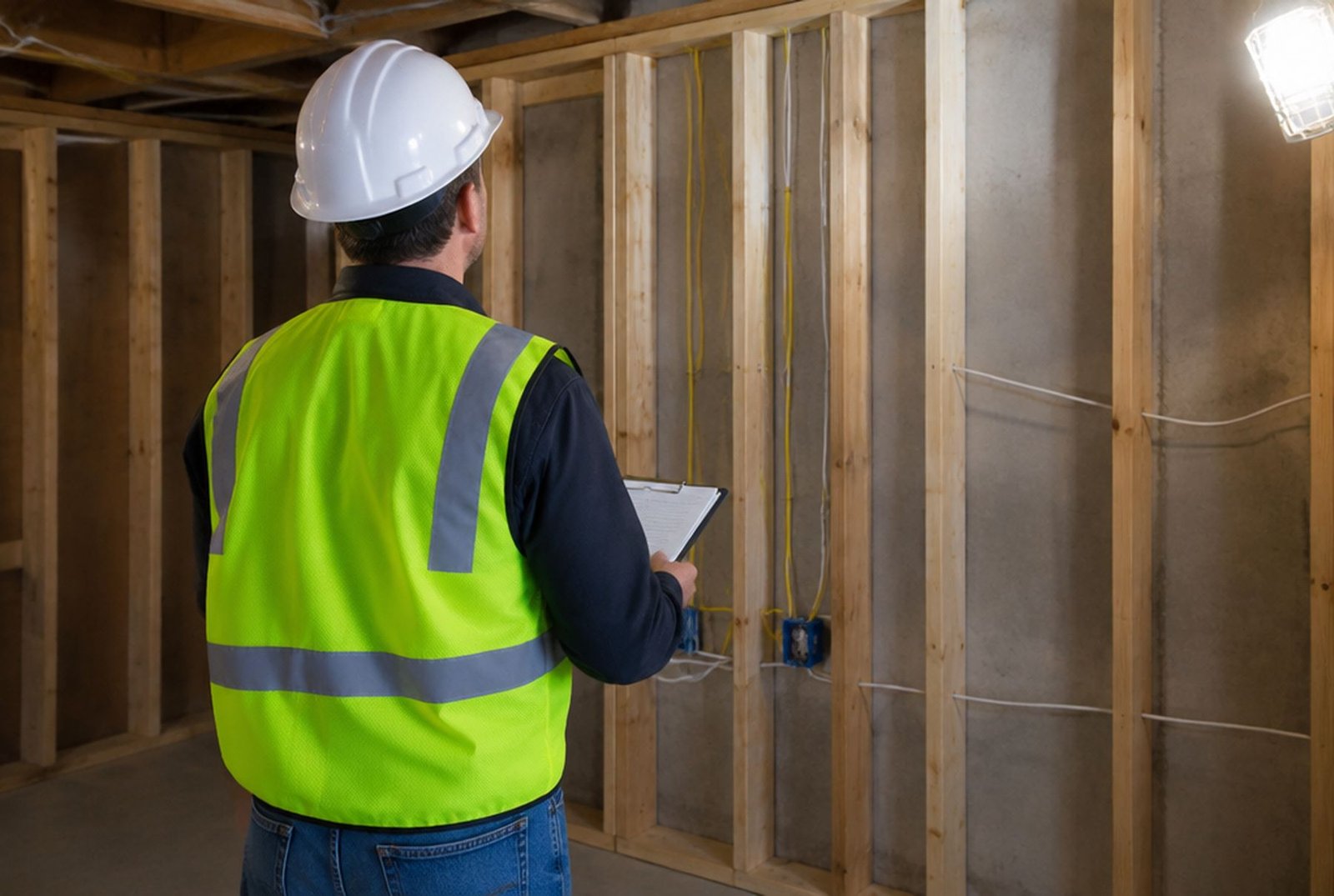
When you hire a contractor, the contractor applies for the permits, and the fees are normally built into the price. Ask to see the permit numbers, and make sure the trade permits are in the names of licensed trades. You can check any permit's status yourself on the City's VISTA site with its job access code.
Homeowners can apply for their own building permit, and for homeowner trade permits if they do the work themselves in a home they live in. Our guide to applying for permits and inspections in Calgary has every official link.
Questions people ask
- Is the permit fee based on the size of my house? For renovations, no. Most home renovation permits are flat fees. New homes are charged on their assessed value.
- Do I pay GST on top? The City's totals already include GST where it applies.
- Does a basement renovation cost the same as a new basement? No. Renovating an already developed basement is $205.92, and developing an unfinished basement for the first time is $333.84.
- How long does a permit take? The City estimates about 7 days for most home building permits, and 10 to 12 weeks if a development permit is needed.
Let us handle the paperwork
On every Kay2 renovation, we check your zoning, prepare the drawings, apply for the building, trade and any development permits, and book the inspections. Permit fees are included in the guaranteed price you get before construction starts. Book a consultation to talk about your project.
Sources
- City of Calgary: 2026 Building and Trade Permit Fee Schedule (R2026-02)
- City of Calgary: Home renovations and basements (fees and timelines)
- City of Calgary: Build an addition (fees and timelines)
- City of Calgary: Secondary suite permit costs and timelines
- City of Calgary: Garages, sheds and accessory buildings
Checked November 12, 2026. Programs and rules change; confirm current details with the source before you rely on them.
Talk it through with Kay2
Every project starts with a complimentary consultation with one of our estimators.