
How do you keep pipes from freezing in a Calgary winter?
Keep the house warm, let warm air reach the pipes, keep a little water moving on the coldest nights, and stop cold air from getting to the plumbing. Those four habits prevent most frozen pipes, and none of them cost much.
Frozen pipes are one of the most common winter problems we see in Calgary homes. A pipe that freezes can split, and when it thaws the water comes out fast, often inside a wall or ceiling where you can't see it. This is the advice our team gives homeowners every winter, along with what we find when we open up walls and ceilings in older houses.
At what temperature do pipes freeze?
Water freezes at 0°C, but a pipe inside a heated house usually won't freeze the moment it drops below zero outside. The risk climbs quickly once outdoor temperatures fall to about minus 7°C and below, and it's highest during a long cold snap, when the cold has days to work into walls, crawl spaces and garages.
Calgary is hard on plumbing. Cold snaps of minus 30 or colder happen most winters, and a chinook can swing the temperature 20 degrees or more in a day. That freeze and thaw cycle is hard on the outside of a house too, as we explain in what chinooks do to Calgary homes.
Which pipes are most likely to freeze?
Pipes freeze where the cold reaches them first. In Calgary homes, these are the places to watch:
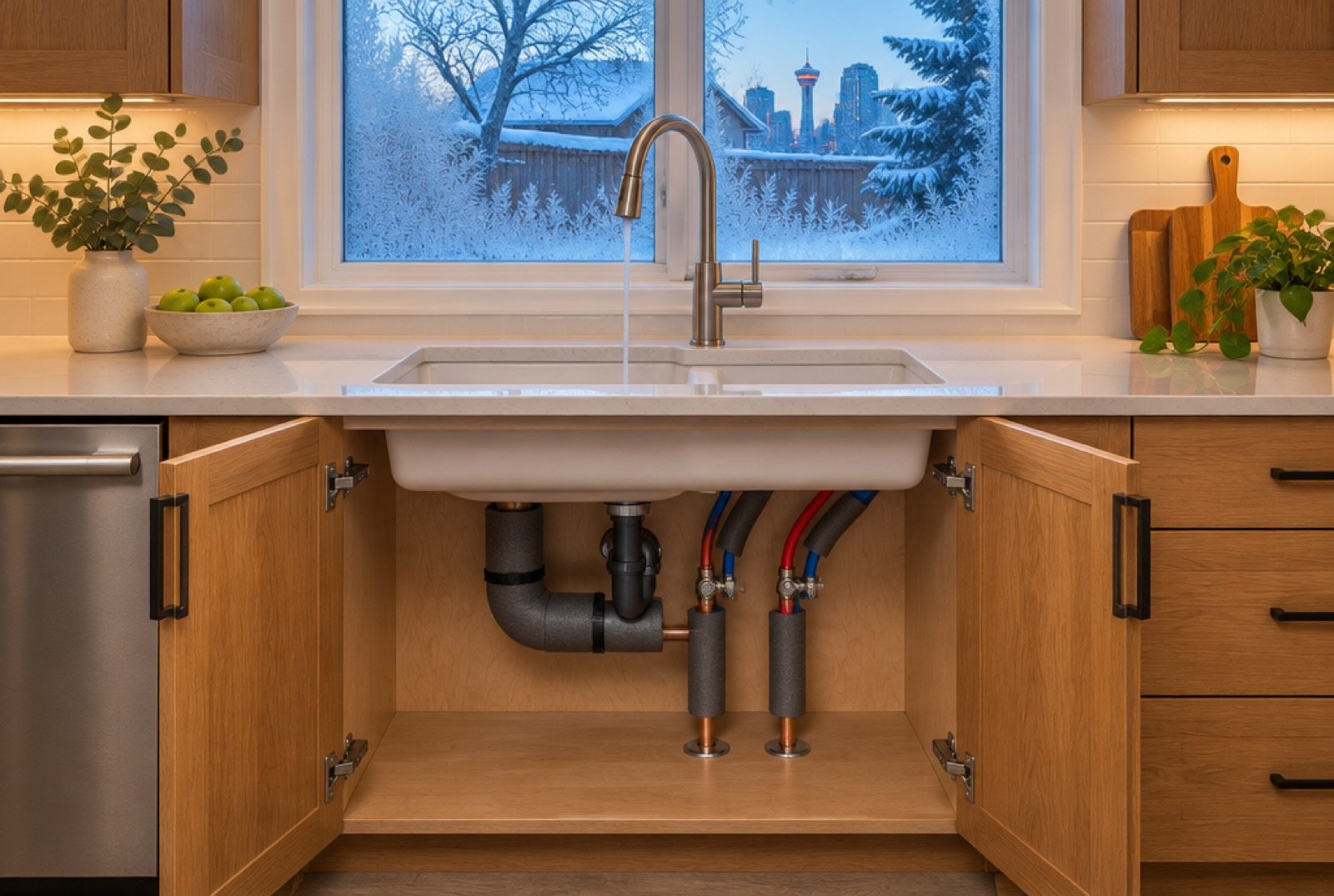
- Pipes in exterior walls, especially under a kitchen or bathroom sink on an outside wall.
- Lines in crawl spaces, unheated garages and cold storage rooms.
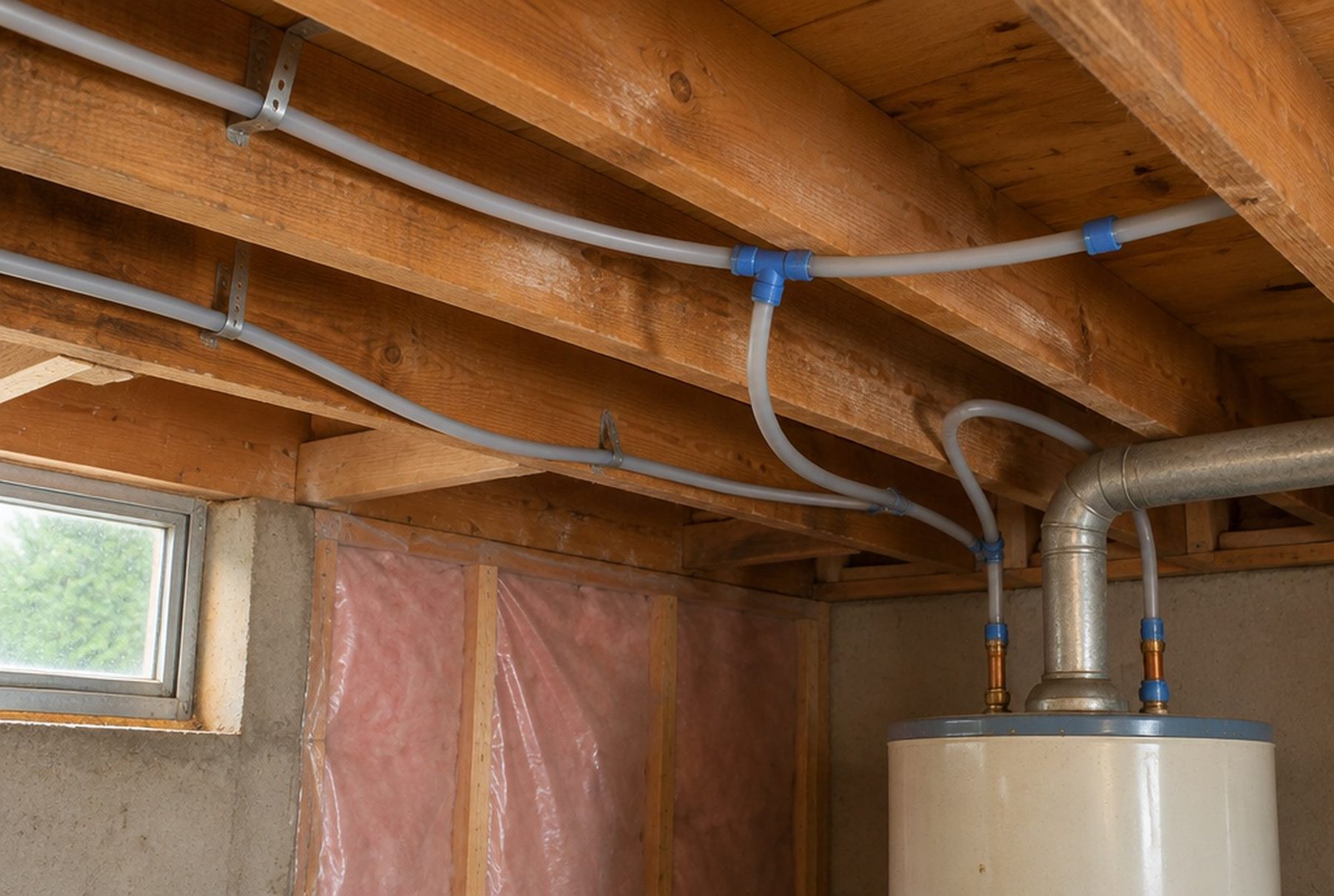
- Plumbing near the rim joist in the basement, where the floor framing meets the foundation and air leaks are common.
- Outdoor hose bibs, and the short length of pipe just inside the wall behind them.
- Bathrooms and kitchens over a garage or in a cantilever, where the floor below is open to the cold. Our guide to building a room over a garage covers how those floors should be insulated.
- Pipes near a drafty window, door or a gap in the foundation.
What should you do when a cold snap is coming?
- Keep the heat on and steady. Keep the house above 15°C, day and night, even when you're away. Turning the thermostat way down overnight saves very little and leaves the coldest pipes exposed.
- Open the cabinet doors under kitchen and bathroom sinks, especially on outside walls, so warm room air can reach the pipes.
- Let a slow trickle run from taps on outside walls. Moving water is harder to freeze, and an open tap relieves the pressure that builds up behind an ice blockage, which is what splits a pipe.
- Seal the drafts. Cold air coming in around windows, doors, the rim joist or foundation can freeze a nearby pipe quickly. Weatherstripping and a can of foam go a long way.
- Add insulation or foam pipe covers where pipes run through cold areas. They're inexpensive and easy to fit on exposed pipes in a basement or crawl space.
- Disconnect garden hoses and shut off the inside valve to each outdoor tap in the fall, then open the outdoor tap to drain it.
- Keep the door between the house and an attached garage closed, and keep the big garage door shut.
What if you're going away in winter?
Leave the heat on, set no lower than 15°C, and ask someone to check the house every day or two. A furnace that quits while you're away is the most common way a winter trip turns into a flooded basement.
For a longer trip, you can shut off the main water valve and open the taps to drain the lines. Check your home insurance before you go. Many policies have conditions about leaving a house unheated or unchecked in winter, and frozen pipes are one of the classic claims. Our guide to whether your home insurance covers you during a renovation explains what to ask your insurer.
How do you know if a pipe is frozen?
- You turn on a tap and only a little water comes out, or none at all.
- You hear knocking, banging or unusual noises in the plumbing.
- You see frost on an exposed pipe, or a section of pipe that bulges.
- A toilet doesn't refill after you flush it.
- There's a damp patch, a bubble in the paint or water staining on a wall or ceiling, which can mean a frozen pipe has already split.
If you notice reduced water flow or strange noises and suspect a pipe is frozen, it's time to call a professional. A plumber or contractor can thaw the line safely, stop more damage and check for leaks.
How do you thaw a frozen pipe safely?
If the frozen section is exposed and easy to reach, you can try thawing it yourself. If it's inside a wall or ceiling, or you can't find it, call a plumber.
- Open the tap the pipe feeds, so water can flow out as the ice melts.
- Warm the pipe gently, starting at the tap end and working back toward the frozen spot. A hair dryer, heating pad, space heater kept at a safe distance or towels soaked in hot water all work.
- Never use an open flame, a propane torch or a heat gun on a pipe. Fire is a real risk, and overheating can damage the pipe and the fittings.
- Keep heating until full water pressure comes back, then check every other tap in the house. If one pipe froze, another may have too.
- Watch the thawed section for drips. A pipe can split while it's frozen and only start leaking once it thaws.
What should you do if a pipe bursts?
Turn off the main water supply right away, then call a plumber or contractor. Minutes matter, because a split supply line can put a lot of water into a house quickly.
- Find your main shut-off valve now, before you need it. In most Calgary homes it's in the basement, on the water line near the water meter, where the line comes in through the foundation.
- If water is near electrical outlets, panels or appliances, stay out of it and turn off the power to that area only if you can reach the panel safely.
- Open a tap on the lowest floor to drain the water still in the lines.
- Move belongings out of the way and start soaking up water.
- Take photos of the damage and call your insurer before any repair work starts.
Can a renovation stop pipes from freezing for good?
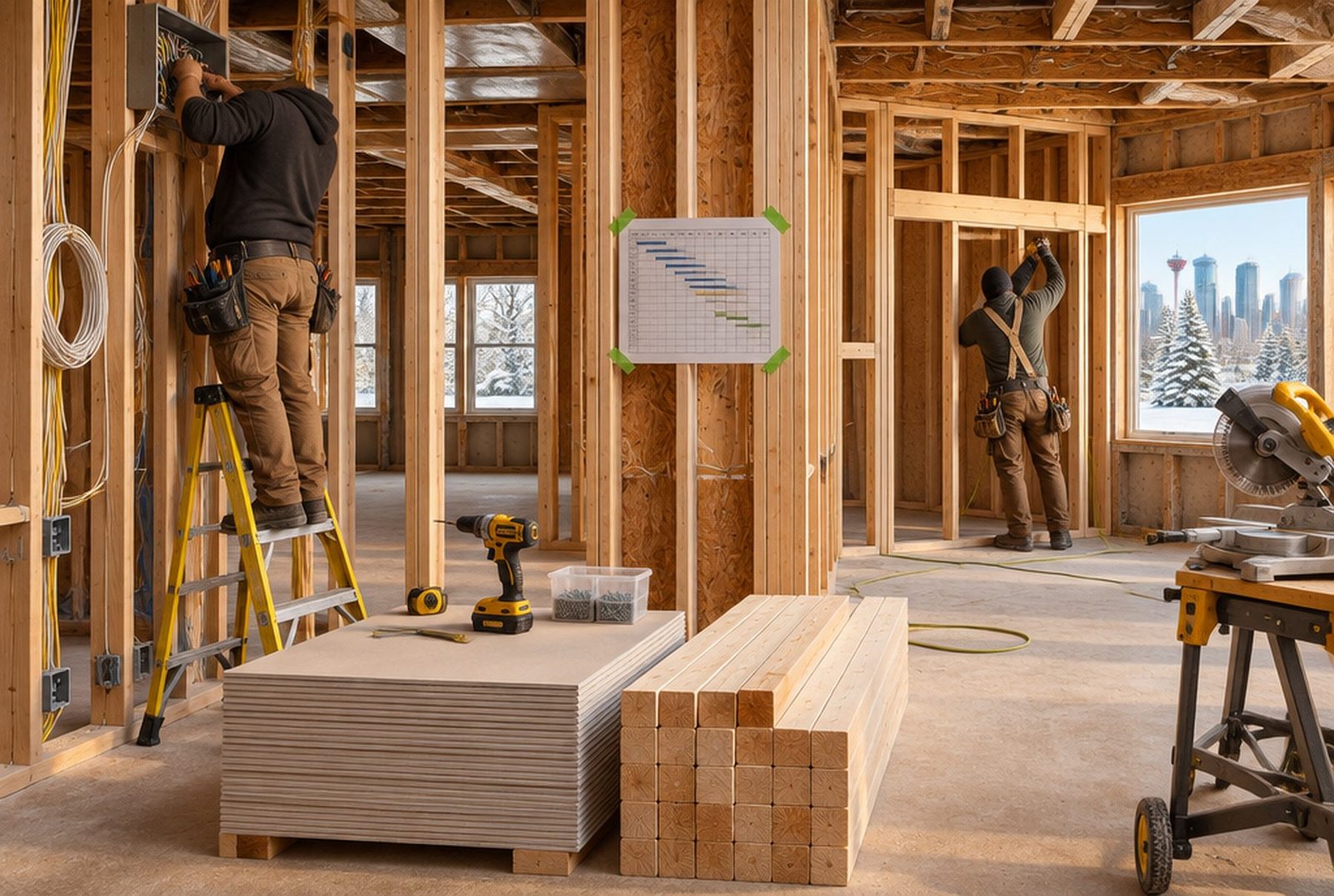
Yes. The habits above get you through a cold snap, but a renovation is the time to fix why a pipe was cold in the first place. When walls and ceilings are open, the plumbing can be moved, insulated and sealed properly, and it costs far less than doing it later on its own.
- Move supply lines out of exterior walls. In a kitchen or bathroom renovation, the plumbing can often be routed through an interior wall or the cabinet run so it stays on the warm side of the insulation.
- Insulate and air-seal the rim joist. This is one of the leakiest parts of an older Calgary basement, and sealing it helps the whole house, not just the pipes.
- Insulate floors over garages and cantilevers properly, so a bathroom above stays warm.
- Replace old or failing supply lines. Many Calgary homes from the late 1970s to the mid 1990s still have poly-B plumbing, and a renovation is a good time to deal with it. Our guide on whether to replace poly-B pipes explains the choices.
- Fit frost-free outdoor taps that shut off inside the warm part of the wall.
If you're planning work anyway, ask your designer and project manager where the water lines will run before the walls are closed. For more on building for the cold, read how to design a home for cold winters and what's inside your walls.
Talk it through with Kay2
Every project starts with a complimentary consultation with one of our estimators.