Why cabinets deserve attention
In most kitchen renovations, cabinets are one of the largest single costs, and they do more than store things. They decide where everything lives, how drawers open, how the room looks and how well it holds up to daily use. Two kitchens can look similar in a photo and feel completely different after five years, and the difference is usually in the parts you do not see.
Stock, semi-custom and custom
| Type | What it means | Good for | Trade-offs |
|---|---|---|---|
| Stock | Pre-made boxes in set sizes and a limited range of colours and doors | Tight budgets, rentals, laundry rooms | Fillers to make sizes fit, fewer options, varied quality |
| Semi-custom | Standard boxes with more sizes, modifications, finishes and accessories | Most mid-range kitchens | Some size and design limits |
| Custom | Built to your exact measurements and design by a cabinetmaker | Unusual spaces, high ceilings, specific design, long life | Highest cost and longest lead time |
Lead times vary widely by maker and season. Stock cabinets can be available in weeks, while semi-custom and custom cabinets often take several weeks to a few months, which is why they are ordered early in a renovation.
The box is where quality hides
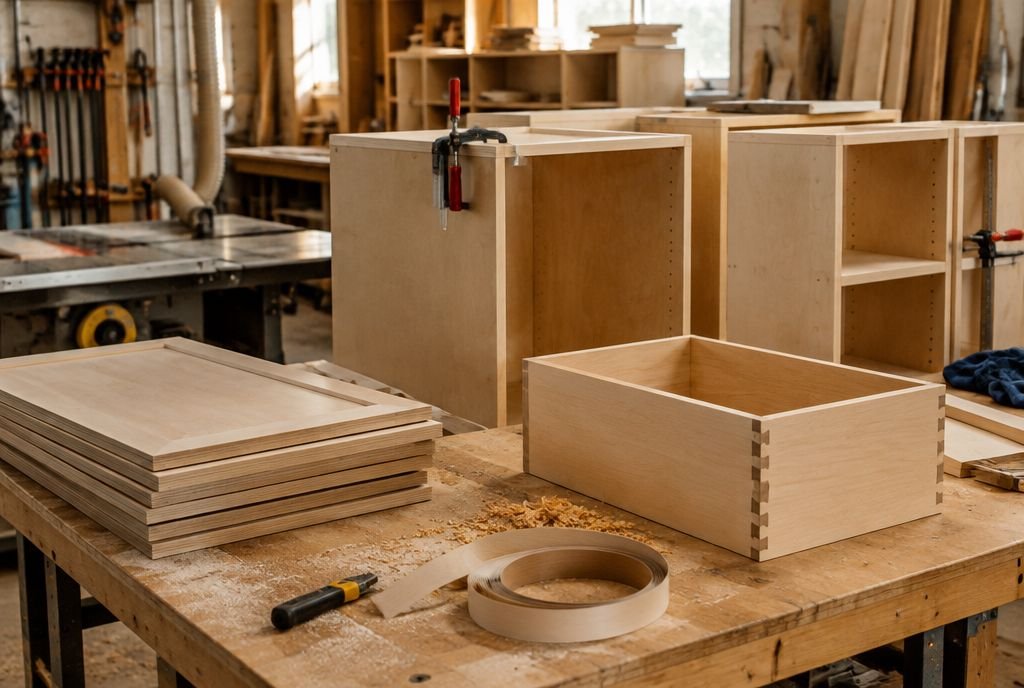
Cabinet boxes are usually made of particleboard, MDF or plywood. Particleboard is affordable and flat but weakens badly if it gets wet, so a slow leak under a sink can ruin it. MDF is smooth and stable and paints beautifully, which makes it common for doors. Plywood is lighter and stronger, holds screws well and tolerates moisture better, which is why many better cabinet lines use it for boxes. Thicker side panels, a solid back and good edge banding all add life.
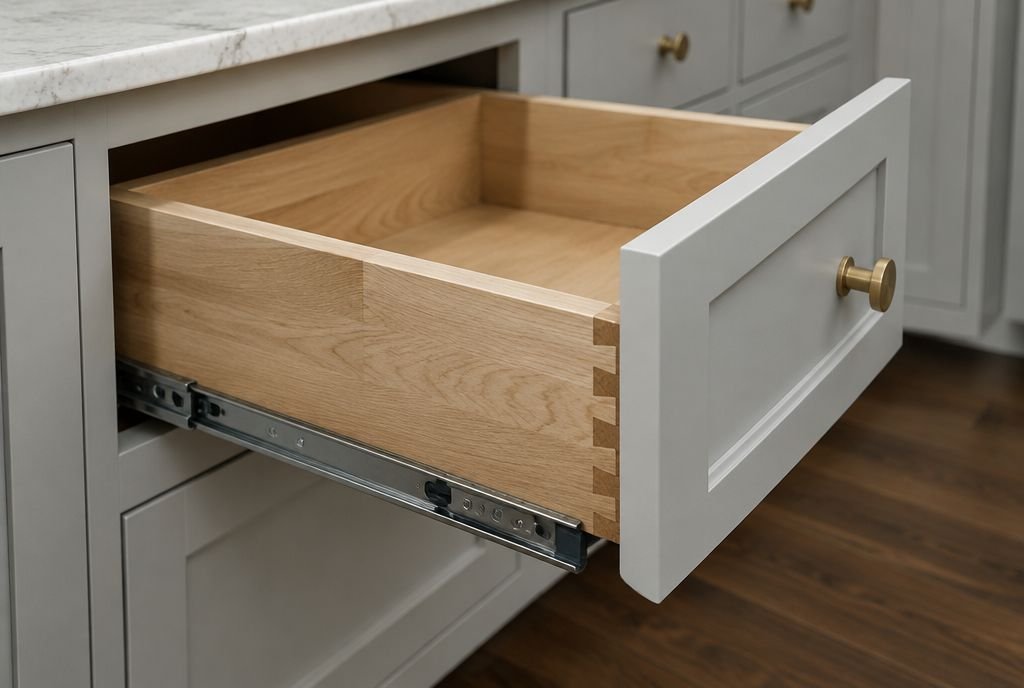
Drawers matter as much as boxes. Look for full-extension slides so you can reach the back, soft-close mechanisms rated for heavy loads, and solid drawer boxes. Dovetail joints on wood drawers are a sign of careful construction.
Framed and frameless
Framed cabinets have a face frame of solid wood around the front of each box, which the doors hang on. It is the traditional North American style, strong and easy to adjust. Frameless cabinets, sometimes called European style, have no face frame. Doors cover the whole box, and you get slightly more interior space and easier access, which suits modern, clean designs. Neither is better. They suit different looks and makers.
Inset, full overlay and partial overlay doors
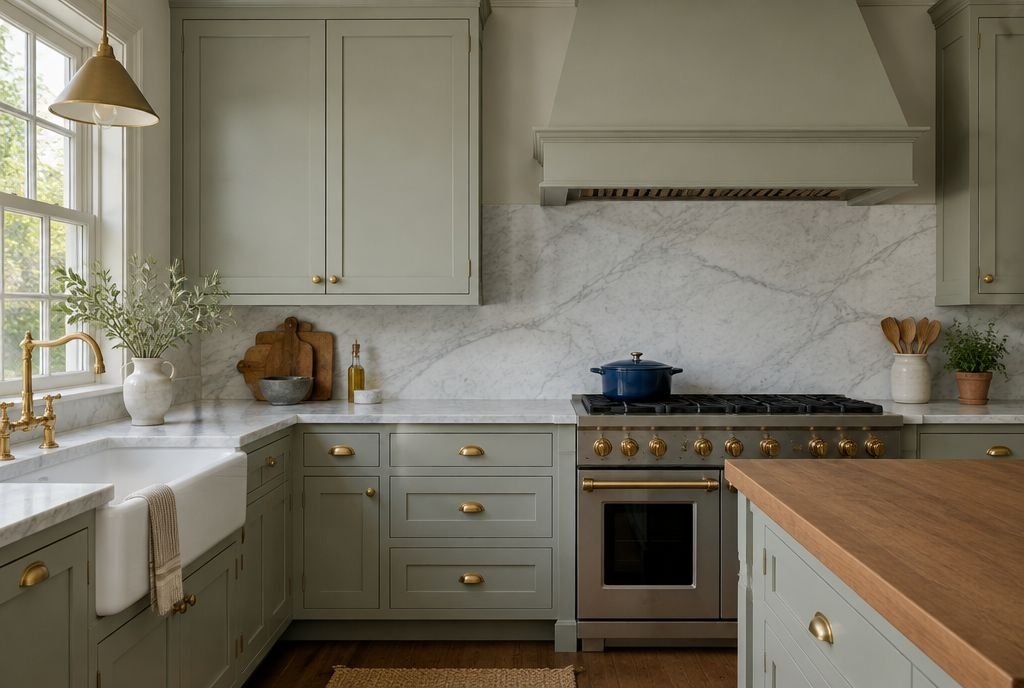
Full overlay doors cover almost all of the box or frame, leaving small even gaps for a clean, modern look. Partial overlay doors leave more of the frame showing and are common in older and budget kitchens. Inset doors sit flush inside the face frame, a traditional look that needs very precise building and installation, because every gap shows. Inset usually costs more and gives up a little interior space.
Door styles and finishes
- Shaker doors, a flat centre panel with a simple frame, are the most versatile style and have stayed popular for decades.
- Slab doors suit modern kitchens and show off wood grain or a smooth painted finish.
- Painted finishes look crisp but can show chips and seasonal hairline gaps at panel joints in dry climates. Factory-applied durable coatings hold up far better than site painting.
- Stained wood hides wear well and has returned strongly in recent years.
- Thermofoil, a vinyl wrap over MDF, is affordable but can peel near heat sources such as ovens.
- Melamine and laminate faces are durable and easy to clean, common in modern and budget lines.
Hardware and inserts
Hinges and slides take the most abuse in a kitchen. Good soft-close hinges and drawer slides from reputable makers are worth more than an expensive door style. Inside, plan for what you actually own. Deep drawers for pots, vertical dividers for trays, pull-out spice and oil racks by the range, a garbage and recycling pull-out by the sink and corner solutions all make a kitchen easier to live with.
Reface, repaint or replace
If the boxes are solid and the layout works, refacing with new doors and drawer fronts, or professionally refinishing existing doors, can transform a kitchen for less. Replacement makes sense when the layout needs to change, the boxes are particleboard that has swollen or sagged, or you want features the old cabinets cannot take. Our guide to updating oak cabinets covers the refresh route.
Questions to ask any cabinet supplier
- What are the boxes and drawer boxes made of, and how thick are the panels?
- What hinges and slides are used, and what is their weight rating?
- How is the finish applied, and what does the warranty cover?
- What is the lead time from final drawings to delivery?
- Who installs them, and who fixes adjustments after installation?
Related guides
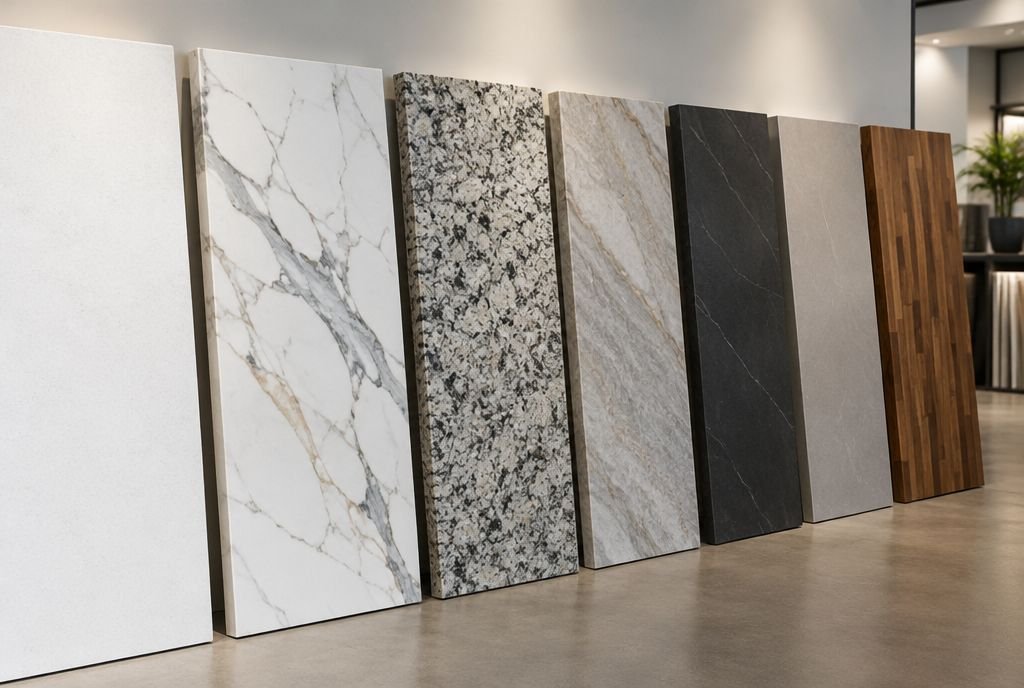
Cabinets work hand in hand with the layout and counters, so read our kitchen layout guide and countertop comparison. Our kitchen renovations page shows how Kay2 designs and builds kitchens.
Talk it through with Kay2
Every project starts with a complimentary consultation with one of our estimators.