
What a wine cellar has to do
Most guidance puts long-term wine storage at around 13°C (55°F), with humidity held steady somewhere in the 50% to 70% range, often around 60% to 70%. Temperature swings do more damage than a degree or two either way: as a bottle warms and cools, the wine and cork expand and contract, and air can work its way in. Too dry, and corks shrink. Too damp, and labels and corks grow mould.
In most of the house you are fighting the opposite conditions: rooms heated to 21°C or more, and winter air that is very dry. A wine room is a small refrigerated space, colder and more humid than everything around it, and that is what makes it a building-science problem as much as a design one.
Why Calgary is harder than most places
Calgary's winter air is dry. Heating contractors routinely see indoor humidity fall well below 35% without a humidifier. A cellar that is only cooled will dry out too, because a cooling coil also removes moisture from the air.
Most Calgary cellars are built on the lower level, where temperatures are steadier. That often puts one or more cellar walls against the concrete foundation, which is cold in winter and cool in summer. The wall assemblies there need extra care, as below.
Insulation
A cellar is insulated like an exterior wall, because the temperature difference to the rest of the house is just as real. Common residential guidance:
- Walls: about R-19 to R-22, typically 2x6 framing with batt insulation, or closed-cell spray foam.
- Ceiling: about R-30, more if the room above is warm.
- Floor: insulated where the slab or subfloor allows, especially over unheated space.
- Interior walls between the cellar and the house are insulated just as fully as the outside ones.
Vapour barriers: the layer most cellars get wrong
Moisture moves from warm to cold. In a wine cellar, the warm side is usually the house, not the cellar. Warm, humid air from the living space pushes into the cellar walls, and if it reaches the cold cellar side of the insulation, it condenses inside the wall, soaking the insulation and leading to mould and rot.
So in a wine cellar the vapour barrier goes on the warm side of the insulation, which is usually the side facing the house, the opposite of where it sits in a normal exterior wall. The details that decide whether it works:
- Continuity. A typical approach is 6-mil poly with seams overlapped and taped, and every outlet, light box and duct penetration sealed. Gaps, corners and penetrations are where cellars fail.
- Closed-cell spray foam. Applied at the right thickness, it is both the insulation and the vapour retarder, in one continuous layer with no seams. It is often the most reliable choice on foundation walls and irregular surfaces.
- Foundation walls need their own design. A cellar wall against cold concrete sees moisture move in different directions in different seasons. These walls should be designed as a complete assembly, often with closed-cell foam against the concrete, rather than adding a sheet of plastic by habit.
- Ceiling and floor are part of the envelope. The barrier wraps the whole room, not just the walls.
- Cellar-grade finishes. Use materials that tolerate a cool, humid room, and never trap moisture between two vapour barriers.
Doors and glass
A cellar door should be treated as an exterior door: solid or insulated, with weatherstripping on all four sides and a sweep or threshold seal at the bottom. The perimeter seal is often the biggest leak in an otherwise well-built room.
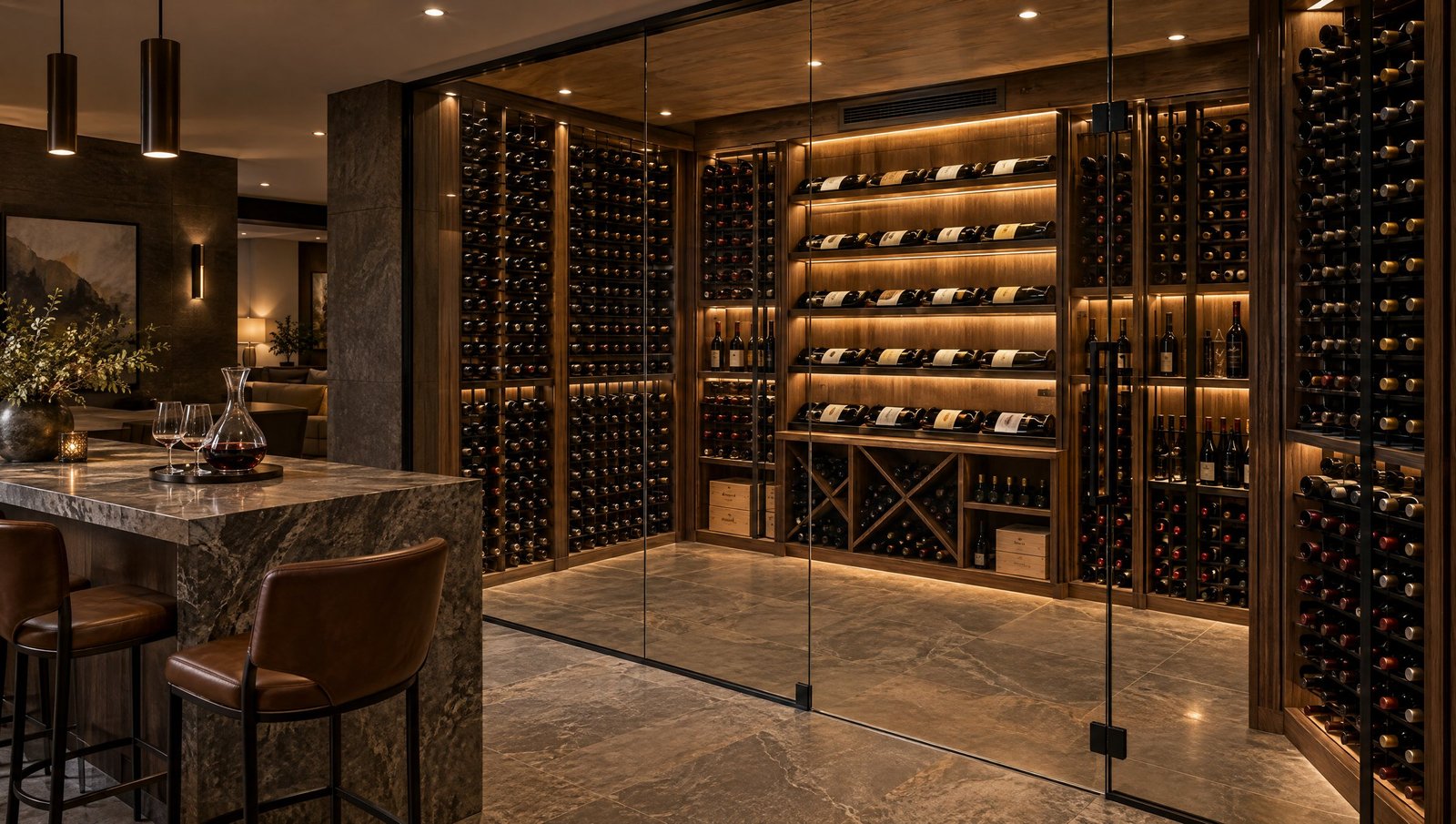
Glass walls are what make a modern cellar a showpiece, and they are also its weakest point. Glass can't take insulation or a vapour barrier, so it adds heat load. Use insulated, tempered glass, double-pane at minimum, with a low-E coating and argon fill. Cooling manufacturers publish heat-gain tables showing single-pane glass adds well over twice the heat of double-pane, so every square foot of glass goes into the cooling calculation.
Specialized refrigeration: the three types
A wine room needs a cooling system designed for it. An ordinary air conditioner is built to cool people and remove moisture, and running it at 13°C dries the room out and wears it out. Wine cellar systems come in three main types:
- Self-contained (through-wall or ducted). Everything is in one unit, which cools the cellar and blows its heat into an adjacent room or through a duct. Simplest to install and the most affordable, but you hear it, and the room receiving the heat must be large and ventilated enough to absorb it.
- Ductless split. A slim evaporator inside the cellar, connected by refrigerant lines to a condenser outside or in a mechanical room. Quieter, with the heat taken out of the house.
- Ducted split. The cooling unit sits in a mechanical room and sends cold air to the cellar through short, insulated ducts, with the condenser remote. The quietest option and nearly invisible: often the choice for glass-walled cellars and display rooms.
Sizing, drainage and who installs it
- Size from a heat-load calculation, not room volume alone. The calculation accounts for insulation, glass area, lighting, the temperature of surrounding rooms and how often the door is opened. An undersized unit runs constantly and can't hold temperature. An oversized one cycles on and off and does a poor job of managing humidity.
- Plan the condensate. Cooling coils produce water that has to drain or evaporate, so the drain route, or a condensate pump, is planned before walls close.
- Give it its own circuit and service access, following the manufacturer's electrical requirements.
- Licensed trades. Refrigeration and air conditioning mechanic is a compulsory certification trade in Alberta, so split systems with refrigerant lines are installed by a certified technician. In Calgary, HVAC installations in renovations need a mechanical permit, and new wiring needs an electrical permit.
Humidity control in a dry city
- Measure it. A digital temperature and humidity monitor, ideally one that logs or sends alerts, tells you what the room is actually doing through the seasons.
- Seal first. A tight vapour barrier and a sealed door do more for humidity than any machine.
- Add a cellar humidifier where needed. Several wine cooling manufacturers offer humidifiers designed for their systems, either freestanding in the cellar or integrated and installed in a mechanical room. In Calgary, plan for one in most cellars, especially those with a lot of glass.
- Avoid over-humidifying. Above about 70%, mould and label damage become the risk. The goal is steady, not wet.
Lighting, racking and finishes
- Low-heat LED lighting, on a dimmer or timer, keeps both heat and UV off the bottles. Feature lighting behind racking and under shelves gives the gallery effect without warming the room.
- Racking that suits the collection: wood racking in classic cellar species, metal and cable systems for a modern look, label-forward display rows for special bottles, and bulk bins for everyday wine. Bottles are stored on their sides to keep corks moist.
- Frameless glass walls and doors that open the cellar to a lounge, bar or dining room.
- Stone, tile or sealed concrete floors that handle the cool, humid room.
- A tasting area outside the cellar, so guests and conversation don't warm the room up.
Where Kay2 fits in
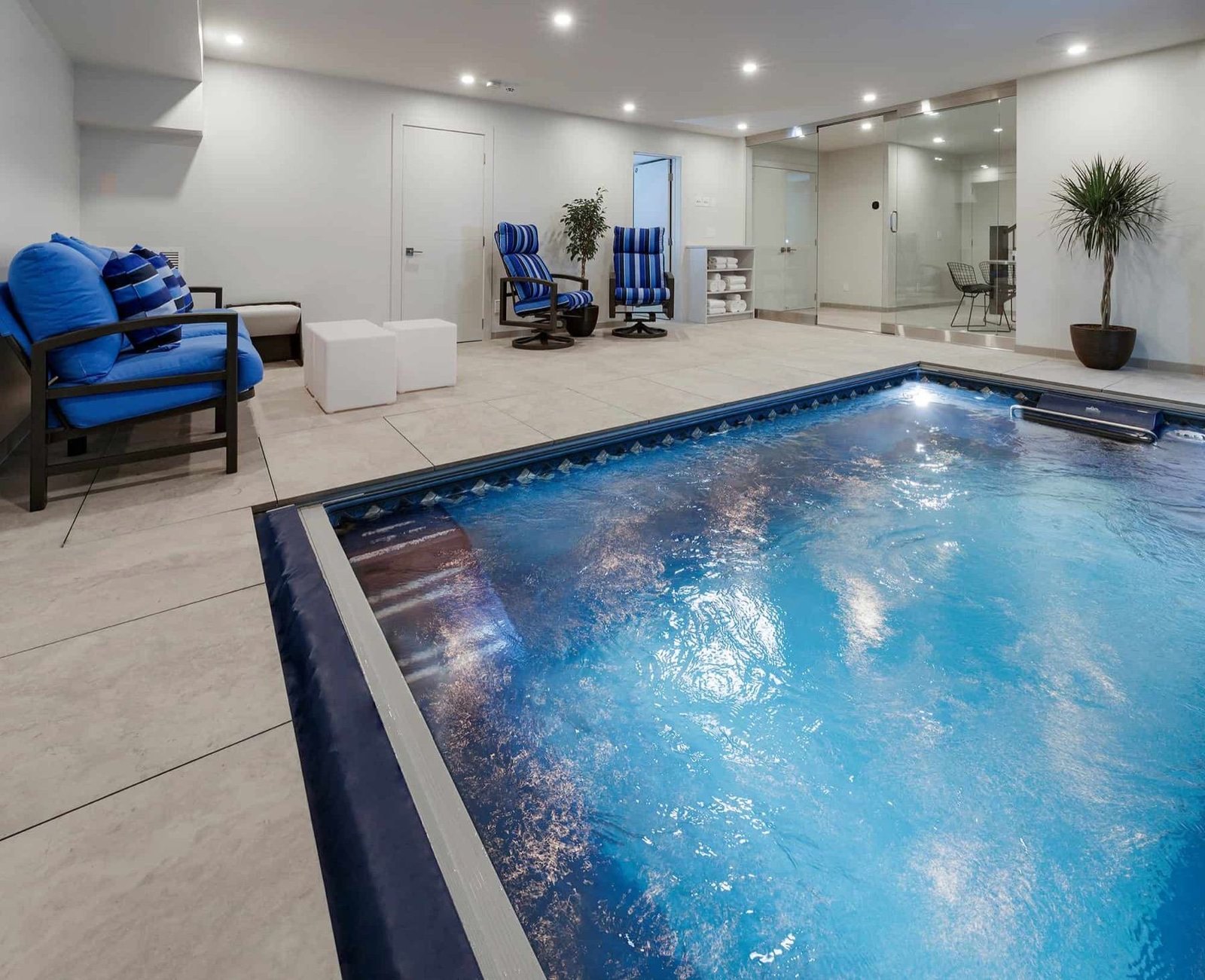
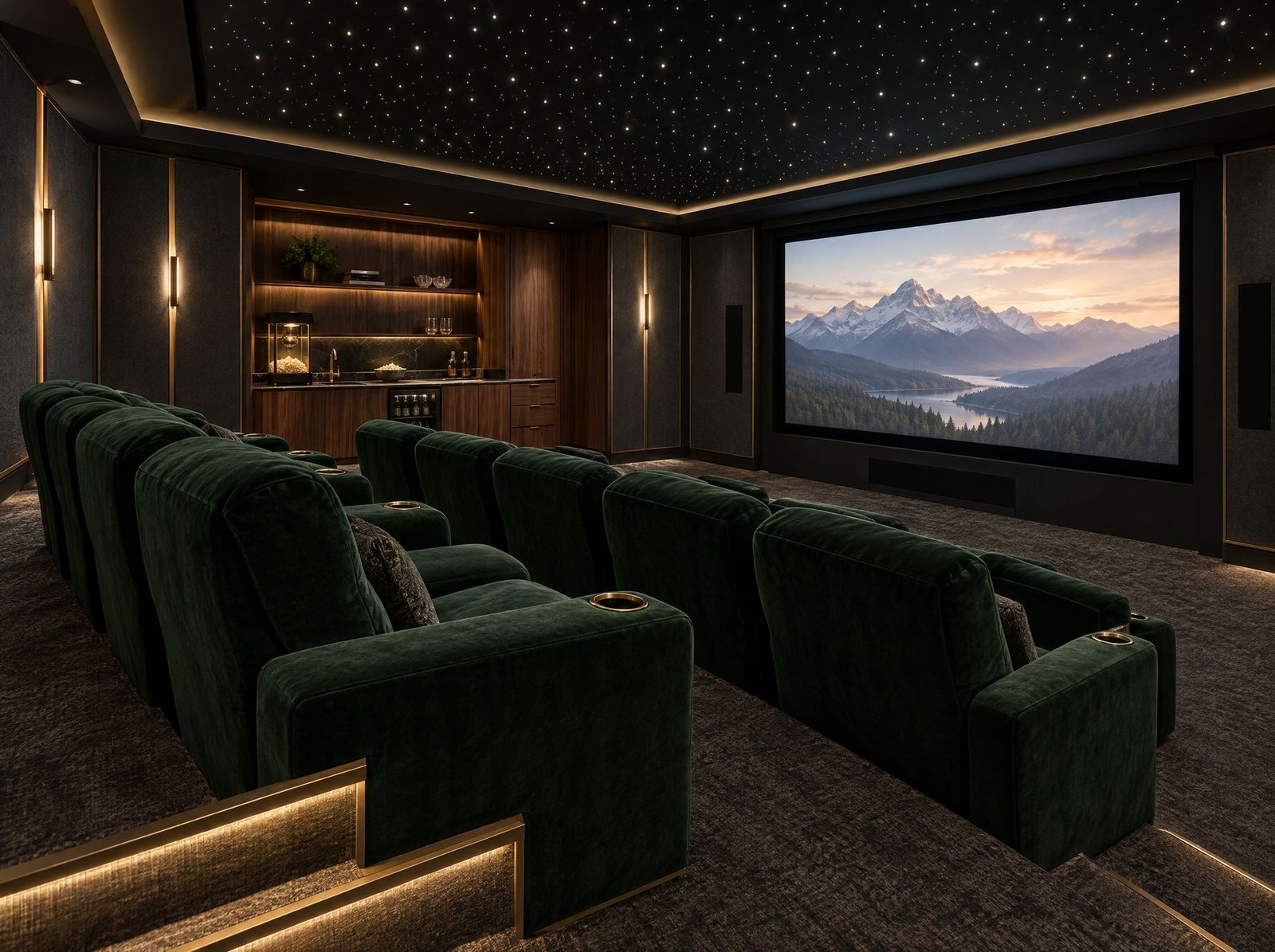
Kay2 designs and builds wine rooms as part of basement developments, whole-home renovations and additions in Calgary. Our award-winning Mayland Heights renovation, named Canada's best basement renovation by CHBA, includes a glass-walled wine room beside a theatre lounge, wet bar and indoor pool. We design the insulation, vapour control, cooling and finishes together, and coordinate the licensed refrigeration trades and permits.
Sources
- Wikipedia: Storage of wine
- Wine Guardian: Proper wine storage temperature and humidity
- Rosehill Wine Cellars: Wine cellar insulation, the layer most people get wrong
- Vigilant: How to build a wine cellar
- Green Building Advisor: Building science puzzles, wine room weirdness
- Wine Guardian: Ducted vs ductless wine cellar cooling units
- Rosehill Wine Cellars: Is a self-contained cooling unit best for your cellar?
- CellarPro: Heat gain adjustment for glass
- Wine Guardian: Wine cellar humidifiers
- Alberta tradesecrets: Refrigeration and air conditioning mechanic
- City of Calgary: Mechanical permits
- City of Calgary: Homeowner trades permits
Checked October 9, 2026. Programs and rules change; confirm current details with the source before you rely on them.
Talk it through with Kay2
Every project starts with a complimentary consultation with one of our estimators.