
Three-season or four-season
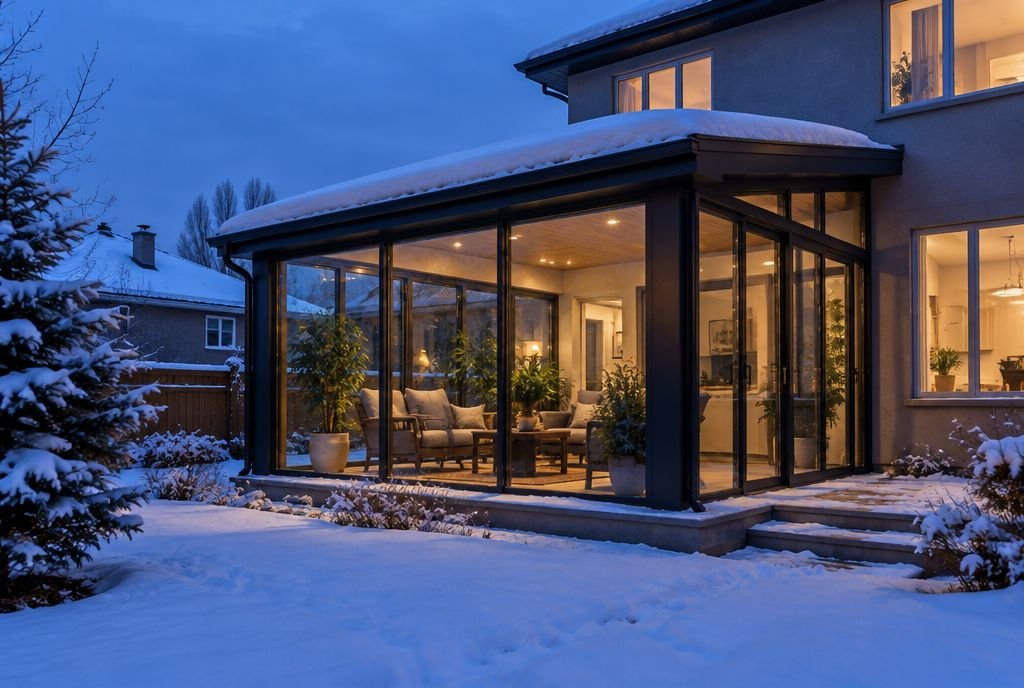
A three-season room is lightly built, often with single glazing or screens and no permanent heat, so in Calgary it is usable from roughly spring to fall. A four-season sunroom is a true addition to the house. It has a foundation, insulated walls and roof, high-performance windows and its own heat, so you can sit in it on a sunny day in January. If you want to use the room all year, plan it as a four-season room from the start, because upgrading a three-season room later usually means rebuilding most of it.
Permits in Calgary
The City of Calgary treats a sunroom as an addition, so it always needs a building permit. A sunroom at the back that extends no more than 4.6 metres past the original rear wall and stays under 40 square metres fits the City's common limits for a simpler application, while a larger one or one that breaks your district's rules also needs a development permit. Heating and electrical work need their own permits. In 2026 the City lists the building permit at $333.84 for an addition under 400 square feet and $1,302.08 for one over 400 square feet, including the safety codes fee.
Energy rules and glass
Because a four-season room is heated living space, the City asks for a Section 9.36 energy efficiency summary with the building permit. That is where glass choices matter most. Double or triple glazing with a low-e coating, insulated frames and a well-insulated roof keep the room comfortable and stop it from becoming a cold spot in winter and a hot box in summer. South and west facing rooms catch the most sun, and the right glass and some shading keep them from overheating.
Snow, chinooks and the roof
A Calgary sunroom roof has to carry snow, and the freeze and thaw of chinook winters is hard on flashing and seals. A solid insulated roof with skylights is often more comfortable than an all-glass roof, and it is easier to tie into the main house so snow and meltwater run off without leaking at the joint. The structural engineer designs the roof for local snow loads.
Heat and comfort
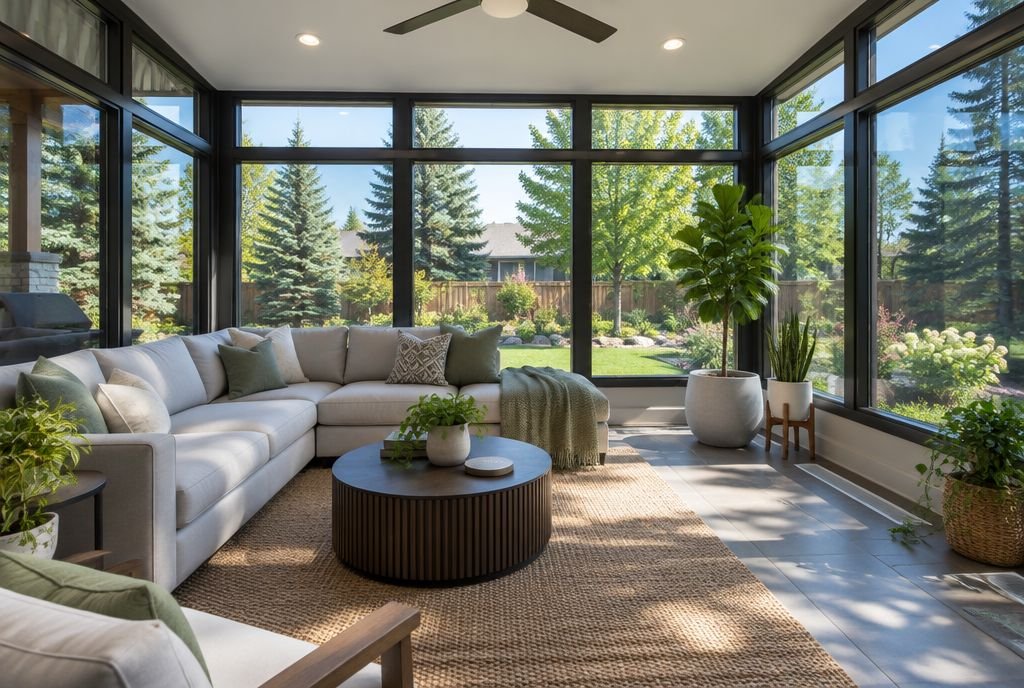
The usual choices are extending the home's forced-air heating, in-floor heat under tile, or a ductless heat pump that also cools the room in summer. In-floor heat is especially good in a sunroom because it warms the floor where cold settles beside large windows. Good ventilation matters too, since a room full of glass and plants can collect moisture in winter.
Designing a sunroom that fits the house
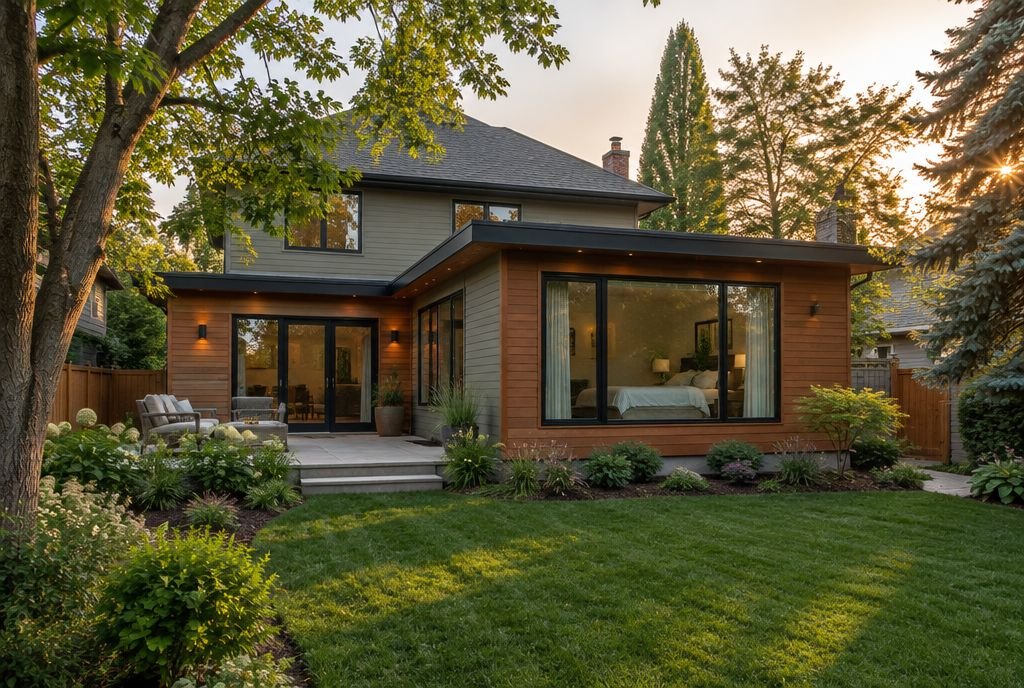
The best sunrooms look like they were part of the original design. That means matching the rooflines and trim of the house, choosing window frames that suit its style and setting the floor at the same level as the room it opens from. A wide opening into the kitchen or family room makes the sunroom part of daily life instead of a room at the end of the hall.
What a sunroom costs in Calgary
Calgary renovation companies publish 2026 ranges of roughly $75 to $150 per square foot for a three-season room and $200 to $350 per square foot for a four-season room. A small sunroom may start around $40,000 to $60,000. A larger four-season addition with its own foundation, heating and premium glazing is priced like a main-floor extension, which Kay2's 2026 cost guide puts at $80,000 to $150,000 or more, and the most substantial ones reach the mid $200,000s to mid $300,000s.
Size, glass, the roof, heating and how the room connects to the house move the price most. Every Kay2 addition is priced on a fixed-price contract before construction starts, and our home addition cost guide covers the factors in more detail.
Plan yours
Tell us how you want to use the room, whether that is morning coffee, a family room, a home office or a place for plants, and we will design it to work in every season. Book a consultation to start with a visit to your home.
Sources
Checked October 17, 2026. Programs and rules change; confirm current details with the source before you rely on them.
Talk it through with Kay2
Every project starts with a complimentary consultation with one of our estimators.