
The general rule
Work from the outside in and from the bones out. Fix what keeps water out and holds the house up, then the systems inside the walls, then the surfaces you see. Doing it the other way round means paying to tear out new finishes later.
The usual sequence on a renovation
- Design, pricing and permits, so the whole job is planned before anything comes down.
- Demolition, and any asbestos abatement that has to happen first in an older home.
- Structural work, such as new beams, foundations or framing.
- Rough-in for plumbing, electrical, heating and ventilation, while walls and ceilings are open.
- Inspections of the rough-in, before anything gets covered.
- Insulation and vapour barrier, then drywall.
- Primer and first coats of paint.
- Cabinets, flooring and tile.
- Trim, doors, fixtures and hardware.
- Final paint touch-ups, cleaning, final inspections and the walkthrough.
Which rooms to do first
If you are renovating in stages, start with anything structural or anything that keeps water out, such as the roof, windows, drainage or a cracked foundation. Then do the projects that create dust and disruption across the house, such as an electrical service upgrade or rerouting plumbing, before you finish any rooms.
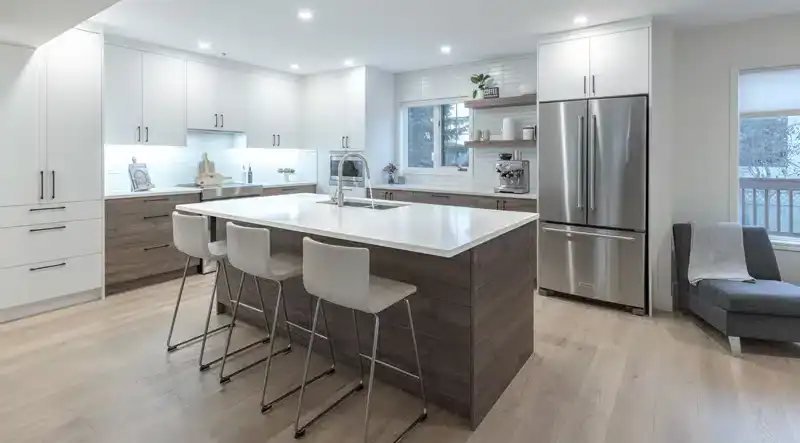
After that, most people do the kitchen first, because it is the room they use most and it often drives the layout of the main floor. Bathrooms and the basement usually follow. If a basement is going to become a legal suite, plan it early, because the fire separation and heating can affect the rest of the house. Our old post on choosing between the kitchen and the ensuite covers that specific choice.
Windows before siding
Replace windows before or at the same time as new siding, never after. New windows need to be flashed and tied into the weather barrier behind the siding. If the siding goes on first, the window installer has to cut into it, and that is where leaks start. The same goes for exterior doors. Our hail-resistant exterior guide covers siding and roofing choices for Calgary.
Flooring, trim and paint
Prime and put the first coat of paint on walls before the flooring goes in, while you do not have to protect new floors. Then install the flooring, then baseboards and trim over it, and finish with the final coat and touch-ups. That avoids gaps at the floor line and keeps paint off the new floor.
Do the hidden work while the walls are open
The cheapest time to upgrade wiring, add outlets, replace old drains, add insulation or run cables for speakers and networking is when the walls and ceilings are already open. Once drywall is up, every one of those jobs costs more. If you might add a bathroom or a suite in the future, have the plumbing roughed in now.
Why design comes first
Most sequencing problems start with decisions made too late. When the design is finished, the finishes are chosen and the long-lead items are ordered before construction starts, each trade can come in at the right time. That is how Kay2 runs every project, with one project manager coordinating the trades from demolition to the final walkthrough. Our guide to how long a renovation takes shows typical timelines.
Talk it through with Kay2
Every project starts with a complimentary consultation with one of our estimators.